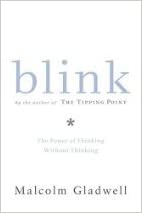
Blink
₦20,000.00In his landmark bestseller The Tipping Point, Malcolm Gladwell redefined how we understand the world around us. Now, in Blink, he revolutionizes the way we understand the world within.
Blink is a book about how we think without thinking, about choices that seem to be made in an instant-in the blink of an eye-that actually aren’t as simple as they seem. Why are some people brilliant decision makers, while others are consistently inept? Why do some people follow their instincts and win, while others end up stumbling into error? How do our brains really work-in the office, in the classroom, in the kitchen, and in the bedroom? And why are the best decisions often those that are impossible to explain to others?
In Blink we meet the psychologist who has learned to predict whether a marriage will last, based on a few minutes of observing a couple; the tennis coach who knows when a player will double-fault before the racket even makes contact with the ball; the antiquities experts who recognize a fake at a glance. Here, too, are great failures of “blink”: the election of Warren Harding; “New Coke”; and the shooting of Amadou Diallo by police.
Blink reveals that great decision makers aren’t those who process the most information or spend the most time deliberating, but those who have perfected the art of “thin-slicing”-filtering the very few factors that matter from an overwhelming number of variables.

Barely Functional Adult
₦20,000.00From the creator of Barely Functional Adult, a painfully relatable webcomic with over 130k followers on Instagram, comes a never-before-seen collection of incriminating short stories about exes, murder, friendship, therapy, anxiety, Hufflepuff, sucking at things, freaking out about things, calming down momentarily, melodrama, wrinkles, pettiness, and other wonderful delights.
Wielding her trademark balance of artful humor, levity, and heartbreaking introspection, Meichi Ng’s indisputably relatable collection of short stories holds a mirror to our past, present, and future selves. Featuring a swaddled Barely Functional Adult as its protagonist who says all the things we think but dare not say, this book is equal parts humorous and heartbreaking as it spans a spectrum of topics from imposter syndrome, therapy, friendships, first loves, letting go of exes, to just trying to find your purpose in the world. Prepare to excitedly shove this book in your friend’s face with little decorum as you shout, “THIS IS SO US!”
In this beautiful, four-color collection compiled completely of never-before-seen content, Meichi perfectly captures the best and worst of us in every short story, allowing us to weep with pleasure at our own fallibility. Hilarious, relatable, and heart-wrenchingly honest, Barely Functional Adult will have you laughing and crying in the same breath, while taking solace in the fact that we’re anything but alone in this world.

Bartlett’s Familiar Quotations
₦20,000.00More than 150 years after its original publication, Bartlett’s Familiar Quotations has been completely revised and updated for its eighteenth edition. Bartlett’s showcases a sweeping survey of world history, from the times of ancient Egyptians to present day.
New authors include Warren Buffett, the Dalai Lama, Bill Gates, David Foster Wallace, Emily Post, Steve Jobs, Jimi Hendrix, Paul Krugman, Hunter S. Thompson, Jon Stewart, Elizabeth Kubler-Ross, Barack Obama, Che Guevara, Randy Pausch, Desmond Tutu, Julia Child, Fran Leibowitz, Harper Lee, Nassim Nicholas Taleb, Patti Smith, William F. Buckley, and Robert F. Kennedy.
In the classic Bartlett’s tradition, the book offers readers and scholars alike a vast, stunning representation of those words that have influenced and molded our language and culture.

Ego Is The Enemy
₦20,000.00Many of us insist the main impediment to a full, successful life is the outside world. In fact, the most common enemy lies within: our ego. Early in our careers, it impedes learning and the cultivation of talent. With success, it can blind us to our faults and sow future problems. In failure, it magnifies each blow and makes recovery more difficult. At every stage, ego holds us back.
Ego Is the Enemy draws on a vast array of stories and examples, from literature to philosophy to history. We meet fascinating figures such as George Marshall, Jackie Robinson, Katharine Graham, Bill Belichick, and Eleanor Roosevelt, who all reached the highest levels of power and success by conquering their own egos. Their strategies and tactics can be ours as well.
In an era that glorifies social media, reality TV, and other forms of shameless self-promotion, the battle against ego must be fought on many fronts. Armed with the lessons in this book, as Holiday writes, “you will be less invested in the story you tell about your own specialness, and as a result, you will be liberated to accomplish the world-changing work you’ve set out to achieve.”
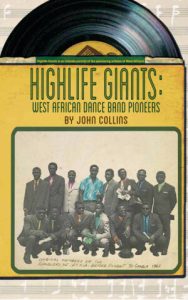
Highlife Giants
₦20,000.00As West Africa’s oldest form of popular music, highlife was the soundtrack of the independence era. Its influence still resonates today.
Highlife Giants is an intimate portrait of the pioneering artistes of West Africa’s music scene from the 1920s onwards. It contains interviews with stars such as E.T Mensah, Kofo Ghanaba, King Bruce, Bobby Benson, Victor Uwaifo, and Ignace De Souza revealing priceless behind-the-scenes moments such as Louis Armstrong giving Eddie Okonta a trumpet with a golden mouthpiece after seeing him perform. Highlife Giants charts the development of this rich and varied popular form which is hugely influential on contemporary West African music from Afrobeat to hiplife.
Blending European and African-American styles with traditional African patterns, highlife music contributed to the development of post-independence national identity in both Ghana and Nigeria. As such, highlife remains crucial in generating social commentary, protest and contributing to the formation of a pan-African musical identity.
For those who lived through the era, Highlife Giants will be a compendium that invokes treasured memories. For their children and grandchildren, this book will inspire an interest in the rich musical history of West Africa
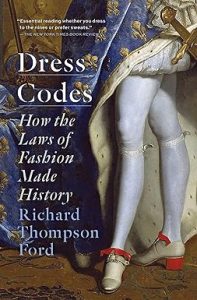
Dress Codes
₦20,000.00Dress codes are as old as clothing itself. For centuries, clothing has been a wearable status symbol; fashion, a weapon in struggles for social change; and dress codes, a way to maintain political control. Merchants dressing like princes and butchers’ wives wearing gem-encrusted crowns were public enemies in medieval societies structured by social hierarchy and defined by spectacle. In Tudor England, silk, velvet, and fur were reserved for the nobility, and ballooning pants called “trunk hose” could be considered a menace to good order. The Renaissance-era Florentine patriarch Cosimo de Medici captured the power of fashion and dress codes when he remarked, “One can make a gentleman from two yards of red cloth.” Dress codes evolved along with the social and political ideals of the day, but they always reflected struggles for power and status. In the 1700s, South Carolina’s “Negro Act” made it illegal for Black people to dress “above their condition.” In the 1920s, the bobbed hair and form-fitting dresses worn by free-spirited flappers were banned in workplaces throughout the United States, and in the 1940s, the baggy zoot suits favored by Black and Latino men caused riots in cities from coast to coast.
Even in today’s more informal world, dress codes still determine what we wear, when we wear it—and what our clothing means. People lose their jobs for wearing braided hair, long fingernails, large earrings, beards, and tattoos or refusing to wear a suit and tie or make-up and high heels. In some cities, wearing sagging pants is a crime. And even when there are no written rules, implicit dress codes still influence opportunities and social mobility. Silicon Valley CEOs wear t-shirts and flip-flops, setting the tone for an entire industry: women wearing fashionable dresses or high heels face ridicule in the tech world, and some venture capitalists refuse to invest in any company run by someone wearing a suit.
In Dress Codes, law professor and cultural critic Richard Thompson Ford presents a “deeply informative and entertaining” (The New York Times Book Review) history of the laws of fashion from the middle ages to the present day, a walk down history’s red carpet to uncover and examine the canons, mores, and customs of clothing—rules that we often take for granted. After reading Dress Codes, you’ll never think of fashion as superficial again—and getting dressed will never be the same.
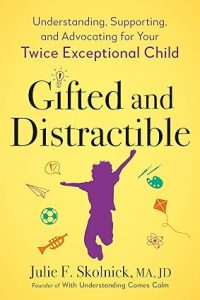
Gifted And Distractible
₦20,000.00Does your child exhibit giftedness and behavioral issues like meltdowns, power struggles, and difficulty relating to their peers? Are they out-of-the-box thinkers requiring different teaching and learning methods? It’s a widely held misconception that intellectual ability and social and emotional success go hand in hand. In fact, “twice exceptional” kids—those who are gifted and have simultaneous learning differences like ADHD, Autism, or dyslexia—are often misunderstood by parents, teachers, and themselves.
This much-needed and empowering guide reveals the unique challenges these remarkable kids face, and offers strength-based, hands-on strategies for understanding, supporting, and advocating for twice exceptional kids. In a world that labels them lazy, scattered, attention-seeking, and a problem that can’t be solved, these tools will help you reimagine the world through your child’s unique perspective—so you can help them thrive.

Black Chameleon
₦20,000.00Growing up as a Black girl in America, Deborah D.E.E.P. Mouton yearned for stories she could connect to―true ones, of course, but also fables and mythologies that could help explain both the world and her place in it. Greek and Roman myths felt as dusty and foreign as ancient ruins, and tales by Black authors were often rooted too far in the past, a continent away.
Mouton’s memoir is a praise song and an elegy for Black womanhood. She tells her own story while remixing myths and drawing on traditions from all over the world: mothers literally grow eyes in the backs of their heads, children dust the childhood off their bodies, and women come to love the wildness of the hair they once tried to tame. With a poet’s gift for lyricism and poignancy, Mouton reflects on her childhood as the daughter of a preacher and a harsh but loving mother, living in the world as a Black woman whose love is all too often coupled with danger, and finally learning to be a mother to another Black girl in America.
Of the moment yet timeless, playful but incendiary, Mouton has staked out new territory in the memoir form.

Look
₦20,000.00A powerful exploration of how we pay attention that will transform the ways we connect with one another – at home, at work, and beyond.
Paying attention is a crucial human skill, yet many of us have forgotten how to listen carefully and observe intentionally. Deluged by social media and hobbled by the increasing social isolation it fosters, we need to rediscover the deeply human ways we connect with others.
Christian Madsbjerg, a philosopher and entrepreneur, understands this dilemma. To counteract it, he began a course at The New School in New York City called Human Observation, which lays out the ways that we can learn to pay attention more effectively. The course has been hugely popular since its inception, with hundreds of students filling waiting lists.
In Look, Madsbjerg sets out the key observational skills needed to show how we can recapture our ability to pay attention. Drawing from philosophy, science, the visual arts, and his own life, he offers both practical insights and a range of tools for experiencing the world with greater richness and texture. The result is a dynamic approach to rethinking observation that helps all of us to see with more empathy, accuracy, and connection to others.

Boys & Sex
₦20,000.00Peggy Orenstein’s Girls & Sex broke ground, shattered taboos, and launched conversations about young women’s right to pleasure and agency in sexual encounters. It also had an unexpected effect on its author: Orenstein realized that talking about girls is only half the conversation. Boys are subject to the same cultural forces as girls—steeped in the same distorted media images and binary stereotypes of female sexiness and toxic masculinity—which equally affect how they navigate sexual and emotional relationships. In Boys & Sex, Peggy Orenstein dives back into the lives of young people to once again give voice to the unspoken, revealing how young men understand and negotiate the new rules of physical and emotional intimacy.
Drawing on comprehensive interviews with young men, psychologists, academics, and experts in the field, Boys & Sex dissects so-called locker room talk; how the word “hilarious” robs boys of empathy; pornography as the new sex education; boys’ understanding of hookup culture and consent; and their experience as both victims and perpetrators of sexual violence. By surfacing young men’s experience in all its complexity, Orenstein is able to unravel the hidden truths, hard lessons, and important realities of young male sexuality in today’s world. The result is a provocative and paradigm-shifting work that offers a much-needed vision of how boys can truly move forward as better men.

Infectious Generosity
₦20,000.00Let’s face it: Recent years have been tough on optimists. Hopes that the Internet might bring people together have been crushed by the ills of social media. Is there a way back?
As head of TED, Chris Anderson has had a ringside view of the world’s boldest thinkers sharing their most uplifting ideas. Inspired by them, he believes that it’s within our grasp to turn outrage back into optimism. It all comes down to reimagining one of the most fundamental human virtues: generosity. What if generosity could become infectious generosity? Consider
• how a London barber began offering haircuts to people experiencing homelessness—and catalyzed a movement
• how two anonymous donors gave $10,000 each to two hundred strangers and discovered that most recipients wanted to “pay it forward” with their own generous acts
• how TED itself transformed from a niche annual summit into a global beacon of ideas by giving away talks online, allowing millions access to free learning
In telling these inspiring stories, Anderson has given us “the first page-turner ever written about human generosity” (Elizabeth Dunn). More important, he offers a playbook for how to embark on our own generous acts—whether gifts of money, time, talent, connection, or kindness—and to prime them, thanks to the Internet, to have self-replicating, even world-changing, impact.