Social Science

Riveted

6,500.00

Why do some things pass under the radar of our attention, but other things capture our interest? Why do some religions catch on and others fade away? What makes a story, a movie, or a book riveting? Why do some people keep watching the news even though it makes them anxious?

The past 20 years have seen a remarkable flourishing of scientific research into exactly these kinds of questions. Professor Jim Davies’ fascinating and highly accessible book, Riveted, reveals the evolutionary underpinnings of why we find things compelling, from art to religion and from sports to superstition. Compelling things fit our minds like keys in the ignition, turning us on and keeping us running, and yet we are often unaware of what makes these “keys” fit. What we like and don’t like is almost always determined by subconscious forces, and when we try to consciously predict our own preferences we’re often wrong. In one study of speed dating, people were asked what kinds of partners they found attractive. When the results came back, the participants’ answers before the exercise had no correlation with who they actually found attractive in person! We are beginning to understand just how much the brain makes our decisions for us: we are rewarded with a rush of pleasure when we detect patterns, as the brain thinks we’ve discovered something significant; the mind urges us to linger on the news channel or rubberneck an accident in case it might pick up important survival information; it even pushes us to pick up People magazine in order to find out about changes in the social structure.

Drawing on work from philosophy, anthropology, religious studies, psychology, economics, computer science, and biology, Davies offers a comprehensive explanation to show that in spite of the differences between the many things that we find compelling, they have similar effects on our minds and brains.

Same as Ever: A Guide to What Never Changes

20,000.00

Every investment plan under the sun is, at best, an informed speculation of what may happen in the future, based on a systematic extrapolation from the known past.

Same as Ever reverses the process, inviting us to identify the many things that never, ever change.

With his usual elan, Morgan Housel presents a master class on optimizing risk, seizing opportunity, and living your best life. Through a sequence of engaging stories and pithy examples, he shows how we can use our newfound grasp of the unchanging to see around corners, not by squinting harder through the uncertain landscape of the future, but by looking backwards, being more broad-sighted, and focusing instead on what is permanently true.

By doing so, we may better anticipate the big stuff, and achieve the greatest success, not merely financial comforts, but most importantly, a life well lived.

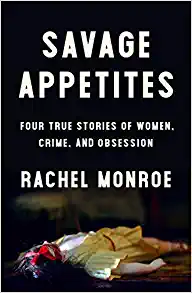
Savage Appetites

6,000.00

In this illuminating exploration of women, violence, and obsession, Rachel Monroe interrogates the appeal of true crime through four narratives of fixation. In the 1940s, a frustrated heiress began creating dollhouse crime scenes depicting murders, suicides, and accidental deaths. Known as the “Mother of Forensic Science,” she revolutionized the field of what was then called legal medicine. In the aftermath of the Manson Family murders, a young woman moved into Sharon Tate’s guesthouse and, over the next two decades, entwined herself with the Tate family. In the mid-nineties, a landscape architect in Brooklyn fell in love with a convicted murderer, the supposed ringleader of the West Memphis Three, through an intense series of letters. After they married, she devoted her life to getting him freed from death row. And in 2015, a teenager deeply involved in the online fandom for the Columbine killers planned a mass shooting of her own.

Each woman, Monroe argues, represents and identifies with a particular archetype that provides an entryway into true crime. Through these four cases, she traces the history of American crime through the growth of forensic science, the evolving role of victims, the Satanic Panic, the rise of online detectives, and the long shadow of the Columbine shooting. In a combination of personal narrative, reportage, and a sociological examination of violence and media in the twentieth and twenty-first century, Savage Appetites scrupulously explores empathy, justice, and the persistent appeal of violence.

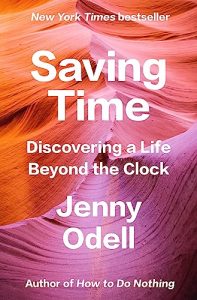
Saving Time

10,000.00

Our daily experience, dominated by the corporate clock that so many of us contort ourselves to fit inside, is destroying us. It wasn’t built for people, it was built for profit. This is a book that tears open the seams of reality as we know it—the way we experience time itself—and rearranges it, reimagining a world not centered around work, the office clock, or the profit motive. Explaining how we got to the point where time became money, Odell offers us new models to live by–inspired by pre-industrial cultures, ecological, and geological time–that make a more humane, more hopeful way of living seem possible.

Scattered Minds

17,000.00

From renowned mental health expert and speaker Dr. Gabor Maté, Scattered Minds explodes the myth of attention deficit disorder (ADD/ADHD) as genetically based—and offers real hope and advice for children and adults who live with the condition.

In this breakthrough guide to understanding, treating, and healing Attention Deficit Disorder, Dr. Gabor Maté, bestselling author of The Myth of Normal, and himself diagnosed with ADD:

– Demonstrates that the condition is not a genetic “illness” but a response to environmental stress
– Explains that in ADD, circuits in the brain whose job is emotional self-regulation and attention control fail to develop in infancy – and why
– Shows how ‘distractibility’ is the psychological product of life experience
– Allows parents to understand what makes their ADD children tick, and adults with ADD to gain insights into their emotions and behaviors
– Expresses optimism about neurological development even in adulthood
– Presents a program of how to promote this development in both children and adults

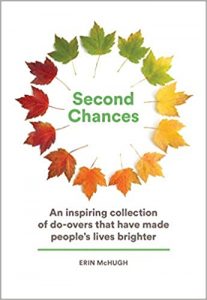
Second Chances

3,000.00

Second Chances is a hopeful and thoughtful compendium of anecdotes from people who have wanted another chance at something—and have taken it. It’s the big stuff like going back to college after the kids have grown up, as well as the little things like getting a judo belt when you thought you could hardly manage a push-up. The book collects the hopeful examples of people who found a leg up, another spurt of energy, a hidden talent, or even an untapped strength, sometimes with the unexpected help of friends or strangers. Combining the feel-good qualities of One Good Deed and the crowdsourcing methods of Like My Mother Always Said, Erin McHugh’s latest book is an inspirational guide about letting the future win over the past.

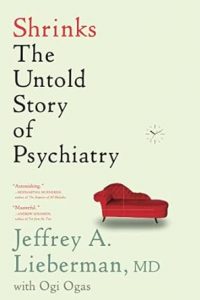
Shrinks: The Untold Story Of Psychiatry

9,000.00

Psychiatry has come a long way since the days of chaining “lunatics” in cold cells and parading them as freakish marvels before a gaping public.

But, as Jeffrey Lieberman, MD, the former president of the American Psychiatric Association, reveals in his extraordinary and eye-opening book, the path to legitimacy for “the black sheep of medicine” has been anything but smooth.

In Shrinks, Dr. Lieberman traces the field from its birth as a mystic pseudo-science through its adolescence as a cult of “shrinks” to its late blooming maturity — beginning after World War II — as a science-driven profession that saves lives. With fascinating case studies and portraits of the luminaries of the field — from Sigmund Freud to Eric Kandel — Shrinks is a gripping and illuminating read, and an urgent call-to-arms to dispel the stigma of mental illnesses by treating them as diseases rather than unfortunate states of mind.

Situations Matter

5,000.00

The world around you is pulling your strings, shaping your private thoughts and innermost instincts. And you don’t even realize it.

Every day we overlook the enormous power of situations in our lives. We fail to appreciate that life’s basic details—where we are, whom we’re with, and even whether we’re in a hurry—affect how we think and act. Sommers argues that understanding the powerful influence of context forces us to rethink how we see ourselves and makes us more effective at work, at home, and in our daily lives. He describes the pitfalls that we should avoid and offers compelling suggestions on how we can make better decisions and smarter observations about the world around us. Insightful, engaging, and readable, Situations Matter is a primer on the importance of context in our lives and on what really makes people tick.

Social Skills For Kids

6,500.00

From taking turns to making eye contact to staying engaged during conversations, developing appropriate social skills is an important factor for kids to be able to succeed in school and life in general. But how can you tell if your child is really making progress while you read the same stories, have the same conversations, and chaperone the same playdates? The answer is to add some variety to your child’s daily activities with these 150 exercises specially designed to keep your child (and their friends) entertained, all while teaching them effective social skills.

In Social Skills for Kids, you’ll learn everything you need to know about how social skills develop in children and what you can do to support their growth. In this book, you’ll find games to encourage them in group settings, activities that you (or another caregiver) can do alone with your child, and ways to make the most of virtual interactions for social skill development.

So whether you’re looking for new activities to entertain a few friends during playtime, searching for fun (and educational) games you and your child can play together, or even interested in ways to include people you can’t physically visit, Social Skills for Kids has all the tools you need to help your child develop the social skills they need to succeed.

Solved

10,500.00

Denmark is set to achieve 100 per cent renewable energy by 2030.
Iceland has topped the gender equality rankings for a decade and counting.
South Korea’s average life expectancy will soon reach ninety.

How have these places achieved such remarkable outcomes? And how can we apply those lessons to our own communities?

The future we want is already here – it’s just not evenly distributed. By bringing together for the first time tried and tested solutions to society’s most pressing problems, from violence to inequality, Andrew Wear shows that the world we want to live in is already within reach.

Solved is a much-needed dose of optimism in an atmosphere of doom and gloom. Informative, accessible and revelatory, it is a celebration of the power of human ingenuity to make the future brighter for everyone.

1 12 13 14 21