Social Science

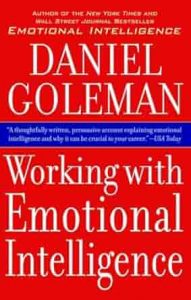
Working With Emotional Intelligence

16,000.00

Do you have what it takes to succeed in your career?

The secret of success is not what they taught you in school. What matters most is not IQ, not a business school degree, not even technical know-how or years of expertise. The single most important factor in job performance and advancement is emotional intelligence. Emotional intelligence is actually a set of skills that anyone can acquire, and in this practical guide, Daniel Goleman identifies them, explains their importance, and shows how they can be fostered.

For leaders, emotional intelligence is almost 90 percent of what sets stars apart from the mediocre. As Goleman documents, it’s the essential ingredient for reaching and staying at the top in any field, even in high-tech careers. And organizations that learn to operate in emotionally intelligent ways are the companies that will remain vital and dynamic in the competitive marketplace of today—and the future.

Comprehensively researched, crisply written, and packed with fascinating case histories of triumphs, disasters, and dramatic turnarounds, Working with Emotional Intelligence may be the most important business book you’ll ever read.

Drawing on unparalleled access to business leaders around the world and studies in more than 500 organizations, Goleman documents an astonishing fact: in determining star performance in every field, emotional intelligence matters twice as much as IQ or technical expertise.

Readers also discover how emotional competence can be learned. Goleman analyzes five key sets of skills and vividly shows how they determine who is hired and who is fired in the top corporations in the world. He also provides guidelines for training in the “emotionally intelligent organization,” in chapters that no one, from manager to CEO, should miss.
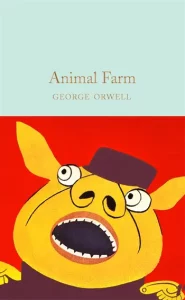
Animal Farm

4,000.00

Animal Farm is George Orwell’s brilliant political satire and allegorical fable about the corrupting effects of power. Published in 1945 it is, to this day, one of the most famous and influential works of fiction ever written.

When the old Major, a highly respected white boar, gathers his fellow farm animals to preach about freedom, rebellion and the evils of man, he incites a revolution that has been brewing for years. The animals drive out their drunken farmer, Mr Jones and create their own society which promises equality for all. Two scheming pigs, Napoleon and Snowball, appoint themselves leaders and what begins as a supposedly equalitarian community descends into an increasingly violent and hierarchical society permeated by lies and corruption.

America, Their America

4,000.00

This is an account of one programme to make friends for America during the Cold War, which failed with a Parvin Fellow at Princeton, the young JP Clark. The Nigerian poet later went on to enjoy warm hospitality in the United States, returning as a guest of the State Department, Distinguished Fellow at the famous Centre for the Humanities at Wesleyan University in Connecticut, and Visiting Professor at Lincoln and Yale. With grants from the Ford Foundation, he also took a tour of theatres from coast to coast, and to help run his own repertory company at home in Lagos.

Infectious Generosity

20,000.00

Let’s face it: Recent years have been tough on optimists. Hopes that the Internet might bring people together have been crushed by the ills of social media. Is there a way back?

As head of TED, Chris Anderson has had a ringside view of the world’s boldest thinkers sharing their most uplifting ideas. Inspired by them, he believes that it’s within our grasp to turn outrage back into optimism. It all comes down to reimagining one of the most fundamental human virtues: generosity. What if generosity could become infectious generosity? Consider

• how a London barber began offering haircuts to people experiencing homelessness—and catalyzed a movement
• how two anonymous donors gave $10,000 each to two hundred strangers and discovered that most recipients wanted to “pay it forward” with their own generous acts
• how TED itself transformed from a niche annual summit into a global beacon of ideas by giving away talks online, allowing millions access to free learning

In telling these inspiring stories, Anderson has given us “the first page-turner ever written about human generosity” (Elizabeth Dunn). More important, he offers a playbook for how to embark on our own generous acts—whether gifts of money, time, talent, connection, or kindness—and to prime them, thanks to the Internet, to have self-replicating, even world-changing, impact.

How You Say It

17,000.00

We gravitate toward people like us; it’s human nature. Race, class, and gender shape our social identities, and thus who we perceive as “like us” or “not like us”. But one overlooked factor can be even more powerful: the way we speak.

As the pioneering psychologist Katherine Kinzler reveals in How You Say It, the way we talk is central to our social identity because our speech largely reflects the voices we heard as children. We can change how we speak to some extent, whether by “code-switching” between dialects or learning a new language; over time, your speech even changes to reflect your evolving social identity and aspirations. But for the most part, we are forever marked by our native tongue—and are hardwired to prejudge others by theirs, often with serious consequences.

Your accent alone can determine the economic opportunity or discrimination you encounter in life, making speech one of the most urgent social-justice issues of our day. Our linguistic differences present challenges, Kinzler shows, but they also can be a force for good. Humans can benefit from being exposed to multiple languages —a paradox that should inspire us to master this ancient source of tribalism, and rethink the role that speech plays in our society.

1 2 18