Politics

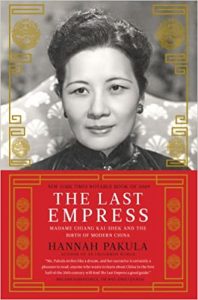
The Last Empress: Madame Chiang Kai-shek and the Birth of Modern China

6,500.00

With the beautiful, powerful, and sexy Madame Chiang Kai-Shek at the center of one of the great dramas of the twentieth century, this is the story of the founding of modern China, starting with a revolution that swept away more than 2,000 years of monarchy, followed by World War II, and ending in eventual loss to the Communists and exile in Taipei. Praised by China scholar Jonathan Spence for “an impressive amount of telling material, drawn from a wide array of sources,” Pakula presents an epic historical tapestry.

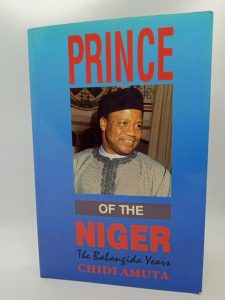
Prince of the Niger (Hardcover)

6,500.00

A compassionate conservative soldier-statesman, Babangida, in or out of office is not likely to be ignored in any honest attempt to understand the great economic and political challenges which beset Nigeria and Africa in the last decades of the twentieth century. Consequently the journey to Nigeria’s future greatness or demise must necessarily take its bearing from the Babangida years.

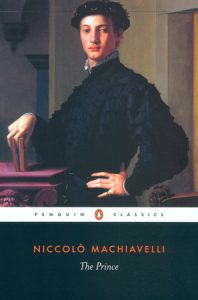
The Prince

6,000.00

Machiavelli’s highly influential treatise on political power

The Prince shocked Europe on publication with its advocacy of ruthless tactics for gaining absolute power and its abandonment of conventional morality. Niccoló Machiavelli drew on his own experience of office under the turbulent Florentine republic, rejecting traditional values of political theory and recognizing the complicated, transient nature of political life. Concerned not with lofty ideal but with a regime that would last, The Prince has become the bible of realpolitik, and it still retains its power to alarm and to instruct. In this edition, Machiavelli’s tough-minded and pragmatic Italian is preserved in George Bull’s clear, unambiguous translation.

For more than seventy years, Penguin has been the leading publisher of classic literature in the English-speaking world. With more than 1,700 titles, Penguin Classics represents a global bookshelf of the best works throughout history and across genres and disciplines. Readers trust the series to provide authoritative texts enhanced by introductions and notes by distinguished scholars and contemporary authors, as well as up-to-date translations by award-winning translators.

Fellow Nigerians, It’s All Politics!

6,000.00

In this collection of socio-political essays, Simon Kolawole, respected columnist and founder of TheCable newspaper, identifies politics, or “politicking”, as the major obstacle to Nigeria’s progress. Other problems, he argues, derive from the wrong form of politicking — manifesting in the manipulation of ethnic, religious and regional differences for political gain. To get out of underdevelopment, he contends, Nigerians must enthrone competent and patriotic leadership committed to playing “politics of purpose”.

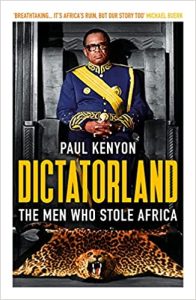
Dictatorland

6,000.00

One dictator grew so rich on his country’s cocoa crop that he built a 35-story-high basilica in the jungles of the Ivory Coast. One austere, incorruptible leader shut Eritrea off from the world in a permanent state of war and conscripted every adult into the armed forces. The Libyan army officer who authored a new work of political philosophy, The Green Book, and lived with a harem of female soldiers, running his country like a mafia family business. And behind these stories of fantastic violence and excess lie the dark secrets of Western greed and complicity, the insatiable taste for chocolate, oil, diamonds, and gold that have encouraged dictators to rule with an iron hand, keeping their people in dire poverty.

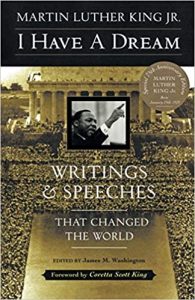
I Have A Dream: Writings & Speeches That Changed The World

6,000.00

“His life informed us, his dreams sustain us yet.”*

On August 28, 1963, Martin Luther King Jr. stood in front of the Lincoln Memorial looking out over thousands of troubled Americans who had gathered in the name of civil rights and uttered his now famous words, “I have a dream . . .” It was a speech that changed the course of history.

This fortieth-anniversary edition honors Martin Luther King Jr.’s courageous dream and his immeasurable contribution by presenting his most memorable words in a concise and convenient edition. As Coretta Scott King says in her foreword, “This collection includes many of what I consider to be my husband’s most important writings and orations.” In addition to the famed keynote address of the 1963 march on Washington, the renowned civil rights leader’s most influential words included here are the “Letter from a Birmingham Jail,” the essay “Pilgrimage to Nonviolence,” and his last sermon, “I See the Promised Land,” preached the day before he was assassinated.

Editor James M. Washington arranged the selections chronologically, providing headnotes for each selection that give a running history of the civil rights movement and related events. In his introduction, Washington assesses King’s times and significance.

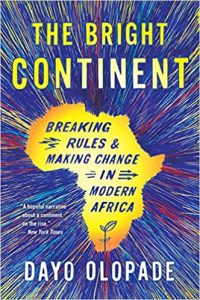
The Bright Continent

6,000.00

Dayo Olopade knew from personal experience that Western news reports on conflict, disease, and poverty obscure the true story of modern Africa. So she crossed sub-Saharan Africa to document how ordinary people deal with their daily challenges. She found what cable news ignores: a continent of ambitious reformers and young social entrepreneurs, driven by kanju―creativity born of African difficulty. It’s a trait found in pioneers like Kenneth Nnebue, who turned cheap VHS tapes into the multimillion-dollar film industry Nollywood. Or Ushahidi, a technology collective that crowdsources citizen activism and disaster relief.

A shining counterpoint to the conventional wisdom, The Bright Continent rewrites Africa’s challenges as opportunities to innovate and celebrates a history of doing more with less as a powerful model for the rest of the world.

Why Nations Fail

6,000.00

Brilliant and engagingly written, Why Nations Fail answers the question that has stumped the experts for centuries: Why are some nations rich and others poor, divided by wealth and poverty, health and sickness, food and famine?

Is it culture, the weather, geography? Perhaps ignorance of what the right policies are?

Simply, no. None of these factors is either definitive or destiny. Otherwise, how to explain why Botswana has become one of the fastest growing countries in the world, while other African nations, such as Zimbabwe, the Congo, and Sierra Leone, are mired in poverty and violence?

Daron Acemoglu and James Robinson conclusively show that it is man-made political and economic institutions that underlie economic success (or lack of it). Korea, to take just one of their fascinating examples, is a remarkably homogeneous nation, yet the people of North Korea are among the poorest on earth while their brothers and sisters in South Korea are among the richest. The south forged a society that created incentives, rewarded innovation, and allowed everyone to participate in economic opportunities.

The economic success thus spurred was sustained because the government became accountable and responsive to citizens and the great mass of people. Sadly, the people of the north have endured decades of famine, political repression, and very different economic institutions—with no end in sight. The differences between the Koreas is due to the politics that created these completely different institutional trajectories.

Based on fifteen years of original research Acemoglu and Robinson marshall extraordinary historical evidence from the Roman Empire, the Mayan city-states, medieval Venice, the Soviet Union, Latin America, England, Europe, the United States, and Africa to build a new theory of political economy with great relevance for the big questions of today

Conversations In Black

6,000.00

Hard-hitting, thought-provoking, and inspiring, Conversations in Black offers sage wisdom for navigating race in a radically divisive America, and, with help from his mighty team of black intelligentsia, veteran journalist Ed Gordon creates hope and a timeless new narrative on what the future of black leadership should look like and how we can get there.

In Conversations in Black, Gordon brings together some of the most prominent voices in black America today, including Stacey Abrams, Harry Belafonte, Charlamagne tha God, Michael Eric Dyson, Alicia Garza, Jemele Hill, Iyanla VanZant, Eric Holder, Killer Mike, Angela Rye, Al Sharpton, T.I., Maxine Waters, and so many more to answer questions about vital topics affecting our nation today

This Is The Fire

6,000.00

The host of CNN Tonight with Don Lemon is more popular than ever. As America’s only Black prime-time anchor, Lemon and his daily monologues on racism and antiracism, on the failures of the Trump administration and of so many of our leaders, and on America’s systemic flaws speak for his millions of fans. Now, in an urgent, deeply personal, riveting plea, he shows us all how deep our problems lie, and what we can do to begin to fix them.

Beginning with a letter to one of his Black nephews, he proceeds with reporting and reflections on his slave ancestors, his upbringing in the shadows of segregation, and his adult confrontations with politicians, activists, and scholars. In doing so, Lemon offers a searing and poetic ultimatum to America. He visits the slave port where a direct ancestor was shackled and shipped to America. He recalls a slave uprising in Louisiana, just a few miles from his birthplace. And he takes us to the heart of the 2020 protests in New York City. As he writes to his young nephew: We must resist racism every single day. We must resist it with love.

Made In China

6,000.00

Discover the truth behind the discounts.

In 2012, an Oregon mother named Julie Keith opened up a package of Halloween decorations. The cheap foam headstones had been five dollars at Kmart, too good a deal to pass up. But when she opened the box, something shocking fell out: an SOS letter, handwritten in broken English.
“Sir: If you occassionally buy this product, please kindly resend this letter to the World Human Right Organization. Thousands people here who are under the persicuton of the Chinese Communist Party Government will thank and remember you forever.”
The note’s author, Sun Yi, was a mild-mannered Chinese engineer turned political prisoner, forced into grueling labor as punishment for campaigning for the freedom to join a forbidden meditation movement. He was imprisoned alongside petty criminals, civil rights activists, and tens of thousands of others the Chinese government had decided to “reeducate,” carving foam gravestones and stitching clothing for more than fifteen hours a day.

In Made in China, investigative journalist Amelia Pang pulls back the curtain on Sun’s story and the stories of others like him, including the persecuted Uyghur minority group, whose abuse and exploitation is rapidly gathering steam. What she reveals is a closely guarded network of laogai—forced labor camps—that power the rapid pace of American consumerism. Through extensive interviews and firsthand reportage, Pang shows us the true cost of America’s cheap goods and shares what is ultimately a call to action—urging us to ask more questions and demand more answers from the companies we patronize.

Three Tigers, One Mountain

6,000.00

There is an ancient Chinese proverb that states, “Two tigers cannot share the same mountain.” However, in East Asia, there are three tigers on that mountain: China, Japan, and Korea, and they have a long history of turmoil and tension with each other. In his latest entertaining and thought provoking narrative travelogue, Michael Booth sets out to discover how deep, really, is the enmity between these three “tiger” nations, and what prevents them from making peace. Currently China’s economic power continues to grow, Japan is becoming more militaristic, and Korea struggles to reconcile its westernized south with the dictatorial Communist north. Booth, long fascinated with the region, travels by car, ferry, train, and foot, experiencing the people and culture of these nations up close. No matter where he goes, the burden of history, and the memory of past atrocities, continues to overshadow present relationships. Ultimately, Booth seeks a way forward for these closely intertwined, neighboring nations.

An enlightening, entertaining and sometimes sobering journey through China, Japan, and Korea, Three Tigers, One Mountain is an intimate and in-depth look at some of the world’s most powerful and important countries.

The Scientist And The Spy

6,000.00

A riveting true story of industrial espionage in which a Chinese-born scientist is pursued by the U.S. government for trying to steal trade secrets, by a finalist for the Pulitzer Prize in nonfiction.

In September 2011, sheriff’s deputies in Iowa encountered three ethnic Chinese men near a field where a farmer was growing corn seed under contract with Monsanto. What began as a simple trespassing inquiry mushroomed into a two-year FBI operation in which investigators bugged the men’s rental cars, used a warrant intended for foreign terrorists and spies, and flew surveillance planes over corn country—all in the name of protecting trade secrets of corporate giants Monsanto and DuPont Pioneer. In The Scientist and the Spy,Hvistendahl gives a gripping account of this unusually far-reaching investigation, which pitted a veteran FBI special agent against Florida resident Robert Mo, who after his academic career foundered took a questionable job with the Chinese agricultural company DBN—and became a pawn in a global rivalry.

Industrial espionage by Chinese companies lies beneath the United States’ recent trade war with China, and it is one of the top counterintelligence targets of the FBI. But a decade of efforts to stem the problem have been largely ineffective. Through previously unreleased FBI files and herreporting from across the United States and China, Hvistendahl describes a long history of shoddy counterintelligence on China, much of it tinged with racism, and questions the role that corporate influence plays in trade secrets theft cases brought by the U.S. government. The Scientist and the Spy is both an important exploration of the issues at stake and a compelling, involving read.

Protocol

6,000.00

In The Bomber Mafia, Malcolm Gladwell weaves together the stories of a Dutch genius and his homemade computer, a band of brothers in central Alabama, a British psychopath, and pyromaniacal chemists at Harvard to examine one of the greatest moral challenges in modern American history.

Most military thinkers in the years leading up to World War II saw the airplane as an afterthought. But a small band of idealistic strategists, the “Bomber Mafia,” asked: What if precision bombing could cripple the enemy and make war far less lethal?

In contrast, the bombing of Tokyo on the deadliest night of the war was the brainchild of General Curtis LeMay, whose brutal pragmatism and scorched-earth tactics in Japan cost thousands of civilian lives, but may have spared even more by averting a planned US invasion. In The Bomber Mafia, Gladwell asks, “Was it worth it?”

Things might have gone differently had LeMay’s predecessor, General Haywood Hansell, remained in charge. Hansell believed in precision bombing, but when he and Curtis LeMay squared off for a leadership handover in the jungles of Guam, LeMay emerged victorious, leading to the darkest night of World War II. The Bomber Mafia is a riveting tale of persistence, innovation, and the incalculable wages of war.

Inside Camp David

6,000.00

Never before have the gates of Camp David been opened to the public. Intensely private and completely secluded, the president’s personal campground is situated deep in the woods, up miles of unmarked roads that are practically invisible to the untrained eye. Now, for the first time, we are allowed to travel along the mountain route and directly into the fascinating and intimate complex of rustic residential cabins, wildlife trails, and athletic courses that make up the presidential family room.

For seventy-five years, Camp David has served as the president’s private retreat. A home away from the hustle and bustle of Washington, this historic site is the ideal place for the First Family to relax, unwind, and, perhaps most important, escape from the incessant gaze of the media and the public. It has hosted decades of family gatherings for thirteen presidents, from Franklin D. Roosevelt to Barack Obama, including holiday celebrations, reunions, and even a wedding. But more than just a weekend getaway, Camp David has also been the site of private meetings and high-level summits with foreign leaders to foster diplomacy.

Former Camp David commander Rear Admiral Michael Giorgione, CEC, USN (Ret.), takes us deep into this enigmatic and revered sanctuary. Combining fascinating first-person anecdotes of the presidents and their families with storied history and interviews with commanders both past and present, he reveals the intimate connection felt by the First Families with this historic retreat.

Young Castro

6,000.00

An intimate, revisionist portrait of the early years of Fidel Castro, showing how an unlikely young Cuban led his country in revolution and transfixed the world.

This book will change how you think about Fidel Castro. Until now, biographers have treated Castro’s life like prosecutors, scouring his past for evidence to convict a person they don’t like or don’t understand. This can make for bad history and unsatisfying biography. Young Castro challenges readers to put aside the caricature of a bearded, cigar-munching, anti-American hot head to discover how Castro became the dictator who acted as a thorn in the side of US presidents for nearly half a century.

These pages show Fidel Castro getting his toughness from a father who survived Spain’s nasty class system and colonial wars to become one of the most successful independent plantation owners in Cuba. They show a boy running around that plantation more comfortable playing with the children of his father’s laborers than his tony classmates at elite boarding schools in Santiago de Cuba and Havana. They show a young man who writes flowery love letters from prison and contemplates the meaning of life, a gregarious soul attentive to the needs of strangers but often indifferent to the needs of his own family. These pages show a liberal democrat who admires FDR’s New Deal policies and is skeptical of communism, but is also hostile to American imperialism. They show an audacious militant who stages a reckless attack on a military barracks but is canny about building an army of resisters. In short, Young Castro reveals a complex man.

The first American historian in a generation to gain access to the Castro archives in Havana, Jonathan Hansen was able to secure cooperation from Castro’s family and closest confidants, gaining access to hundreds of never-before-seen letters and to interviews with people he was the first to ask for their impressions of the man. The result is a nuanced and penetrating portrait of a figure who was determined to be a leader—a man at once brilliant, arrogant, bold, vulnerable and all too human. A man who, having grown up on an island that felt like a colonial cage, was compelled to lead his country to independence.

1 7 8 9 10