Politics

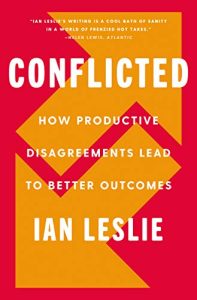
Conflicted

7,000.00

For most people, conflict triggers a fight or flight response. Disagreeing productively is a hard skill for which neither evolution or society has equipped us. It’s a skill we urgently need to acquire; otherwise, our increasingly vociferous disagreements are destined to tear us apart. Productive disagreement is a way of thinking, perhaps the best one we have. It makes us smarter and more creative, and it can even bring us closer together. It’s critical to the success of any shared enterprise, from a marriage, to a business, to a democracy. Isn’t it time we gave more thought to how to do it well?

In an increasingly polarized world, our only chance for coming together and moving forward is to learn from those who have mastered the art and science of disagreement. In this book, we’ll learn from experts who are highly skilled at getting the most out of highly charged encounters: interrogators, cops, divorce mediators, therapists, diplomats, psychologists. These professionals know how to get something valuable – information, insight, ideas—from the toughest, most antagonistic conversations. They are brilliant communicators: masters at shaping the conversation beneath the conversation. They know how to turn the heat of conflict into the light of creativity, connection, and insight.

In this much-need book, Ian Leslie explores what happens to us when we argue, why disagreement makes us stressed, and why we get angry. He explains why we urgently need to transform the way we think about conflict and how having better disagreements can make us more successful. By drawing together the lessons he learns from different experts, he proposes a series of clear principles that we can all use to make our most difficult dialogues more productive—and our increasingly acrimonious world a better place.

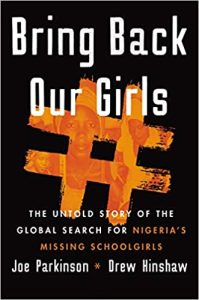
Bring Back Our Girls

7,500.00

What happens after you click Tweet? The heart-stopping definitive account of the mission to rescue hundreds of Nigerian schoolgirls whose abduction ignited a global social media campaign and a dramatic worldwide intervention.

In the spring of 2014, millions of Twitter users, including some of the world’s most famous people, unwittingly helped turn a group of 276 schoolgirls abducted by a little-known Islamist sect into a central prize in the global War on Terror by retweeting a call for their release: #BringBackOurGirls. With just four words, their tweets launched an army of would-be liberators. Soldiers and drones, spies, mercenaries, and glory hunters descended into an obscure conflict that few understood, in a remote part of Nigeria that had barely begun to use the internet.

When hostage talks and military intervention failed, the schoolgirls were forced to take survival into their own hands. As their days in captivity dragged into years, the young women learned to withstand hunger, disease, and torment, and became witnesses and victims of unspeakable brutality. Many of the girls were Christians who refused to take the one path offered them—converting to their captors’ fundamentalist creed. In secret, they sang hymns, and kept a diary, relying on their faith and friendships to stay alive.

Bring Back Our Girls unfolds across four continents, from the remote forests of northern Nigeria to the White House; from clandestine meetings in Khartoum safe houses to century-old luxury hotels on picturesque lakes in the Swiss Alps. A twenty-first century story that plumbs the promise and peril of an era whose politics are fueled by the power of hashtag advocacy, this urgent and engrossing work of investigative journalism reveals the unpredictable interconnectedness of our butterfly-wings world, where a few days of online activism can bring years of offline consequences for people continents away.

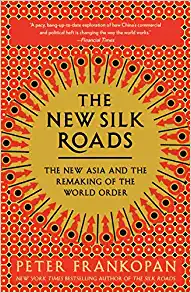
The New Silk Roads

7,000.00

“All roads used to lead to Rome. Today they lead to Beijing.” So argues Peter Frankopan in this revelatory new book.

In the age of Brexit and Trump, the West is buffeted by the tides of isolationism and fragmentation. Yet to the East, this is a moment of optimism as a new network of relationships takes shape along the ancient trade routes. In The New Silk Roads, Peter Frankopan takes us on an eye-opening journey through the region, from China’s breathtaking infrastructure investments to the flood of trade deals among Central Asian republics to the growing rapprochement between Turkey and Russia. This important book asks us to put aside our preconceptions and see the world from a new—and ultimately hopeful—perspective.

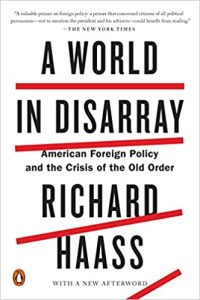
A World In Disarray

5,500.00

Things fall apart; the center cannot hold. The rules, policies, and institutions that have guided the world since World War II have largely run their course. Respect for sovereignty alone cannot uphold order in an age defined by global challenges from terrorism and the spread of nuclear weapons to climate change and cyberspace. Meanwhile, great power rivalry is returning. Weak states pose problems just as confounding as strong ones. The United States remains the world’s strongest country, but American foreign policy has at times made matters worse, both by what the U.S. has done and by what it has failed to do. The Middle East is in chaos, Asia is threatened by China’s rise and a reckless North Korea, and Europe, for decades the world’s most stable region, is now anything but. As Richard Haass explains, the election of Donald Trump and the unexpected vote for “Brexit” signals that many in modern democracies reject important aspects of globalization, including borders open to trade and immigrants.

In A World in Disarray, Haass argues for an updated global operating system—call it world order 2.0—that reflects the reality that power is widely distributed and that borders count for less. One critical element of this adjustment will be adopting a new approach to sovereignty, one that embraces its obligations and responsibilities as well as its rights and protections. Haass also details how the U.S. should act towards China and Russia, as well as in Asia, Europe, and the Middle East. He suggests, too, what the country should do to address its dysfunctional politics, mounting debt, and the lack of agreement on the nature of its relationship with the world.

A World in Disarray is a wise examination, one rich in history, of the current world, along with how we got here and what needs doing. Haass shows that the world cannot have stability or prosperity without the United States, but that the United States cannot be a force for global stability and prosperity without its politicians and citizens reaching a new understanding.

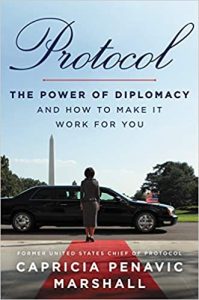
Protocol

6,000.00

In The Bomber Mafia, Malcolm Gladwell weaves together the stories of a Dutch genius and his homemade computer, a band of brothers in central Alabama, a British psychopath, and pyromaniacal chemists at Harvard to examine one of the greatest moral challenges in modern American history.

Most military thinkers in the years leading up to World War II saw the airplane as an afterthought. But a small band of idealistic strategists, the “Bomber Mafia,” asked: What if precision bombing could cripple the enemy and make war far less lethal?

In contrast, the bombing of Tokyo on the deadliest night of the war was the brainchild of General Curtis LeMay, whose brutal pragmatism and scorched-earth tactics in Japan cost thousands of civilian lives, but may have spared even more by averting a planned US invasion. In The Bomber Mafia, Gladwell asks, “Was it worth it?”

Things might have gone differently had LeMay’s predecessor, General Haywood Hansell, remained in charge. Hansell believed in precision bombing, but when he and Curtis LeMay squared off for a leadership handover in the jungles of Guam, LeMay emerged victorious, leading to the darkest night of World War II. The Bomber Mafia is a riveting tale of persistence, innovation, and the incalculable wages of war.

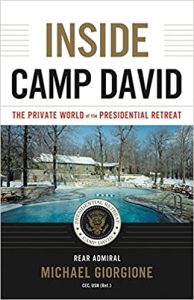
Inside Camp David

6,000.00

Never before have the gates of Camp David been opened to the public. Intensely private and completely secluded, the president’s personal campground is situated deep in the woods, up miles of unmarked roads that are practically invisible to the untrained eye. Now, for the first time, we are allowed to travel along the mountain route and directly into the fascinating and intimate complex of rustic residential cabins, wildlife trails, and athletic courses that make up the presidential family room.

For seventy-five years, Camp David has served as the president’s private retreat. A home away from the hustle and bustle of Washington, this historic site is the ideal place for the First Family to relax, unwind, and, perhaps most important, escape from the incessant gaze of the media and the public. It has hosted decades of family gatherings for thirteen presidents, from Franklin D. Roosevelt to Barack Obama, including holiday celebrations, reunions, and even a wedding. But more than just a weekend getaway, Camp David has also been the site of private meetings and high-level summits with foreign leaders to foster diplomacy.

Former Camp David commander Rear Admiral Michael Giorgione, CEC, USN (Ret.), takes us deep into this enigmatic and revered sanctuary. Combining fascinating first-person anecdotes of the presidents and their families with storied history and interviews with commanders both past and present, he reveals the intimate connection felt by the First Families with this historic retreat.

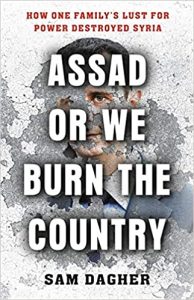
Assad Or We Burn The Country

7,000.00

From a Pulitzer Prize-nominated journalist specializing in the Middle East, this groundbreaking account of the Syrian Civil War reveals the never-before-published true story of a 21st-century humanitarian disaster.

In spring 2011, Syrian President Bashar al-Assad turned to his friend and army commander, Manaf Tlass, for advice about how to respond to Arab Spring-inspired protests. Tlass pushed for conciliation but Assad decided to crush the uprising — an act which would catapult the country into an eight-year long war, killing almost half a million and fueling terrorism and a global refugee crisis.

Assad or We Burn the Country examines Syria’s tragedy through the generational saga of the Assad and Tlass families, once deeply intertwined and now estranged in Bashar’s bloody quest to preserve his father’s inheritance. By drawing on his own reporting experience in Damascus and exclusive interviews with Tlass, Dagher takes readers within palace walls to reveal the family behind the destruction of a country and the chaos of an entire region.

Dagher shows how one of the world’s most vicious police states came to be and explains how a regional conflict extended globally, engulfing the Middle East and pitting the United States and Russia against one another. Timely, propulsive, and expertly reported, Assad or We Burn the Country is the definitive account of this global crisis, going far beyond the news story that has dominated headlines for years.

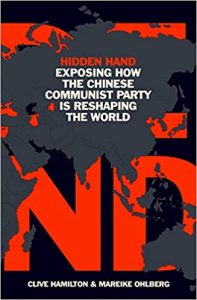
Hidden Hand

7,500.00

The Chinese Communist Party is determined to reshape the world in its image.

Its decades-long infiltration of the West threatens democracy, human rights, privacy, security and free speech. Throughout North America and Europe, political and business elites, Wall Street, Hollywood, think tanks, universities and the Chinese diaspora are being manipulated with money, pressure and privilege. Hidden Hand reveals the myriad ways the CCP is fulfilling its dream of undermining liberal values and controlling the world.

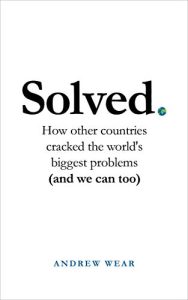
Solved

10,500.00

Denmark is set to achieve 100 per cent renewable energy by 2030.
Iceland has topped the gender equality rankings for a decade and counting.
South Korea’s average life expectancy will soon reach ninety.

How have these places achieved such remarkable outcomes? And how can we apply those lessons to our own communities?

The future we want is already here – it’s just not evenly distributed. By bringing together for the first time tried and tested solutions to society’s most pressing problems, from violence to inequality, Andrew Wear shows that the world we want to live in is already within reach.

Solved is a much-needed dose of optimism in an atmosphere of doom and gloom. Informative, accessible and revelatory, it is a celebration of the power of human ingenuity to make the future brighter for everyone.

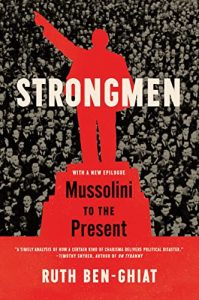
Strongmen

8,500.00

Ruth Ben-Ghiat is the expert on the “strongman” playbook employed by authoritarian demagogues from Mussolini to Putin—enabling her to predict with uncanny accuracy the recent experience in America and Europe. In Strongmen, she lays bare the blueprint these leaders have followed over the past 100 years, and empowers us to recognize, resist, and prevent their disastrous rule in the future.

For ours is the age of authoritarian rulers: self-proclaimed saviors of the nation who evade accountability while robbing their people of truth, treasure, and the protections of democracy. They promise law and order, then legitimize lawbreaking by financial, sexual, and other predators.

They use masculinity as a symbol of strength and a political weapon. Taking what you want, and getting away with it, becomes proof of male authority. They use propaganda, corruption, and violence to stay in power.

Vladimir Putin and Mobutu Sese Seko’s kleptocracies, Augusto Pinochet’s torture sites, Benito Mussolini and Muammar Gaddafi’s systems of sexual exploitation, and Silvio Berlusconi and Donald Trump’s relentless misinformation: all show how authoritarian rule, far from ensuring stability, is marked by destructive chaos.

No other type of leader is so transparent about prioritizing self-interest over the public good. As one country after another has discovered, the strongman is at his worst when true guidance is most needed by his country.

Recounting the acts of solidarity and dignity that have undone strongmen over the past 100 years, Ben-Ghiat makes vividly clear that only by seeing the strongman for what he is—and by valuing one another as he is unable to do—can we stop him, now and in the future.

Biafra In The News

10,000.00

Fifty years ago, Nigeria endured a period of violent disturbance leading to the breakaway of the Eastern Region under the name Biafra. The resulting conflict (1967-70) aroused shock and protests around the world because of mass starvation in the war zone. While Britain supplied arms to the federal
Nigerian government, and France to the Biafrans, relief agencies with contributions from countless individuals organized a memorable airlift of food and medicine to the Biafrans’ Uli airstrip.

Jonathan Derrick, then a journalist for the London weekly West Africa, followed these events closely and
recorded the war in the magazine’s news pages, right up to the federal forces’ final victory and the remarkable reconciliation between supporters of Biafra–predominantly Igbo–and other Nigerians. He later worked for some years in Nigeria, and has studied much of the material published on the war
since 1970.

Here, he recounts the history of the conflict as documented in West Africa, referring to later literature on and analysis of the events, which inspired passion at the time and have provoked debate ever since. His account deals with myths, misapprehensions and controversies surrounding the conflict, while recalling the tragic facts of a grim episode in African history.

Heineken In Africa

7,500.00

For Heineken, “rising Africa” is already a reality: the profits it extracts there are almost 50 per cent above the global average, and beer costs more in some African countries than it does in Europe. Heineken claims its presence boosts economic development on the continent. But is this true?

Investigative journalist Olivier van Beemen has spent years seeking the answer, and his conclusion is damning: Heineken has hardly benefited Africa at all. On the contrary, there are some shocking skeletons in its African closet: tax avoidance, sexual abuse, links to genocide and other human rights
violations, high-level corruption, crushing competition from indigenous brewers, and collaboration with dictators and pitiless anti-government rebels.

Heineken in Africa caused a political and media furor on publication in The Netherlands, and was debated in their Parliament. It is an unmissable exposé of the havoc wreaked by a global giant seeking profit in the developing world.

The Bomb

7,000.00

Fred Kaplan, hailed by TheNew York Times as “a rare combination of defense intellectual and pugnacious reporter,” takes us into the White House Situation Room, the Joint Chiefs of Staff’s “Tank” in the Pentagon, and the vast chambers of Strategic Command to bring us the untold stories—based on exclusive interviews and previously classified documents—of how America’s presidents and generals have thought about, threatened, broached, and just barely avoided nuclear war from the dawn of the atomic age until today.

Kaplan’s historical research and deep reporting will stand as the permanent record of politics. Discussing theories that have dominated nightmare scenarios from Hiroshima and Nagasaki, Kaplan presents the unthinkable in terms of mass destruction and demonstrates how the nuclear war reality will not go away, regardless of the dire consequences.

Criminal Contagion

8,500.00

COVID-19 is reshaping and challenging governments, social order and the world economy in previously unimaginable ways–including changes to the illegal flow of goods and services. Livelihoods are shrinking or disappearing altogether, and mafias, gangsters and profiteers are adapting to find
new routes for illegal commodities, from counterfeit drugs to trafficked wildlife and people.

Shortages, lockdowns and citizen responses have brought the underworld and upperworld into greater convergence, as criminals strive to meet needs, maximize opportunities and fill governance vacuums. Unscrupulous fraudsters are touting fake remedies to desperate people: counterfeit drugs and illicit
wildlife used in traditional medicine. Social distancing and lockdowns have seen online financial transactions and cyber-communication and -operations replacing or supplementing physical shipments and interactions, again affording new opportunities for fraudsters and cyber-criminals. Heavy-handed
state responses have also, quite literally, created new illicit markets by prohibiting the sale of particular goods and services, while some elites have capitalized on the pandemic for personal or political gain.

The pandemic has cast a long shadow over the rule of law. Criminal Contagion uncovers its impacts on the global illicit economy, and unpacks the long-term implications of these extraordinary developments.

The State Of Africa

22,000.00

Africa is forever on our TV screens, but the bad-news stories (famine, genocide, corruption) massively outweigh the good (South Africa). Ever since the process of decolonialisation began in the mid-1950s, and arguably before, the continent has appeared to be stuck in a process of irreversible decline. Constant war, improper use of natural resources and misappropriation of revenues and aid monies contribute to an impression of a continent beyond hope. How did we get here?

What, if anything, is to be done? Weaving together the key stories and characters of the last fifty years into a stunningly compelling and coherent narrative, Martin Meredith has produced the definitive history of how European ideas of how to organise 10,000 different ethnic groups has led to what Tony Blair described as the ‘scar on the conscience of the world’. Authoritative, provocative and consistently fascinating, this is a major book on one of the most important issues facing the West today.

Conspiracies Declassified

6,500.00

A collection of the wildest conspiracies to ever exist, from mind control experiments to lizard people, this book explores, debunks—and sometimes proves—the secret stories that don’t quite make it into the history books.

What’s fact and what’s fiction? With conspiracy theories, sometimes it’s hard to get to the truth!

In Conspiracies Declassified, author and expert skeptic Brian Dunning explains fifty true stories of famous conspiracies throughout history. From the moon landing hoax, to chemtrails, to the mind control dangers of fluoride, Dunning is here to sort the truth from the lies to tell you what really happened.

1 6 7 8 10