Politics

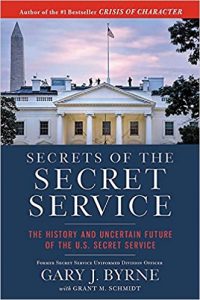
Secrets of the Secret Service

8,000.00

n his new book, former Secret Service officer Gary Byrne takes readers behind the scenes to understand the agency’s history and today’s security failings that he believes put Americans at risk

The American public knows the stories of Secret Service heroism, but they don’t know about the hidden legacy of problems that have plagued the agency ever since its creation.

Gary Byrne says that decades of catastrophic public failures, near misses, and bureaucratic and cultural rot threaten to erode this critical organization from the inside out.

Today, as it works to protect President Trump, the Secret Service stands at a crossroads, and the time needed to choose the right course is running out. Agents and officers are leaving the Secret Service in droves, or they’re being overworked to the point where they lose focus on the job. Management makes decisions based on politics, not the welfare of their employees.

Byrne believes that this means danger for the men and women of the Secret Service, danger for the President they protect, and danger for the nation. In this book, he shares what he has witnessed and learned about the Secret Service with the hope that the problems of this most important agency can be fixed before it’s too late.

Sex With Presidents

9,000.00

In this fascinating work of popular history, the New York Times bestselling author of Sex with Kings and The Royal Art of Poison uncovers the bedroom secrets of American presidents and explores the surprising ways voters have reacted to their leaders’ sex scandals.

While Americans have a reputation for being strait-laced, many of the nation’s leaders have been anything but puritanical. Alexander Hamilton had a steamy affair with a blackmailing prostitute. John F. Kennedy swam nude with female staff in the White House swimming pool. Is it possible the qualities needed to run for president—narcissism, a thirst for power, a desire for importance—go hand in hand with a tendency to sexual misdoing?

In this entertaining and eye-opening book, Eleanor Herman revisits some of the sex scandals that have rocked the nation’s capital and shocked the public, while asking the provocative questions: does rampant adultery show a lack of character or the stamina needed to run the country? Or perhaps both? While Americans have judged their leaders’ affairs harshly compared to other nations, did they mostly just hate being lied to? And do they now clearly care more about issues other than a politician’s sex life?

What is sex like with the most powerful man in the world? Is it better than with your average Joe? And when America finally elects a female president, will she, too, have sexual escapades in the Oval Office?

Soldiers Of Fortune

7,000.00

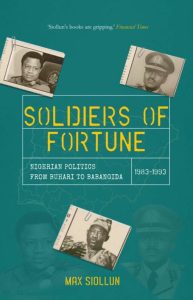
‘This book is the story of Nigeria’s political journey between December 31, 1983 and August 27, 1993. This is the story of how things fell apart.’

The years between 1983 and 1993 were momentous for Nigeria. Military rule was a time of increased violence, rampant corruption, coups, coup plotting and coup baiting. It moulded the conditions and character of Nigeria today, forcing seismic changes on the political, economic and religious landscape that nearly tore the country apart on several occasions.

Soldiers of Fortune is a fast-paced and thrilling narrative of the major events of the Buhari and Babangida era. The book draws on previously uncovered observations from interviews conducted with insiders (including a former member of the Brigade of Guards and Nigerian Airways personnel who witnessed the attempted kidnap of Umaru Dikko), to compile step-by-step dramatic reconstructions of disputed events and intrigues. Siollun’s fresh perspective challenges preconceived views to reveal the true story behind controversies of the period: the annulment of the June 12 election, the dubious execution of Mamman Vatsa, the foiled kidnapping of Umaru Dikko, the Orkar coup and the inconclusive case of the assassination of Dele Giwa.

Historian Max Siollun gives an intimate, fly-on-the-wall portrait of the major events and dramatis personae of the period. He paints a vivid picture of leaders such as Ibrahim Babangida, whose ‘amiable personality, effusive charm and warm bonhomie’ distracted from his determined grip on power, political cunning and retention of detested laws. Siollun also relates anecdotes from how ‘pillow talk’ had a role in the 1983 coup, to the troubled final hours of the condemned Mamman Vatsa, childhood friend of Babangida. We are reminded of the important role played by civilians in supporting and sponsoring successive coups, and as such, we are forced to reassess apparent heroes such as the business tycoon, M.K.O Abiola.

Alongside its close-up, dramatised narrative, Soldiers of Fortune also provides clear and detailed analysis of the period, revealing Nigerians’ complicity in the corruption of everyday life. It makes use of charts, lists and neatly delineated sections to pick apart the complex and often murky details of military rule, effectively demonstrating how the key events and protagonists of the period had a long-lasting impact which still resonates throughout Nigeria today.

Both gripping and informative, Soldiers of Fortune is a must-read for all Nigerians and Nigeria-watchers. Its dramatic narrative style and clear attention to detail will engage casual, journalistic and academic readers alike.

Solved

10,500.00

Denmark is set to achieve 100 per cent renewable energy by 2030.
Iceland has topped the gender equality rankings for a decade and counting.
South Korea’s average life expectancy will soon reach ninety.

How have these places achieved such remarkable outcomes? And how can we apply those lessons to our own communities?

The future we want is already here – it’s just not evenly distributed. By bringing together for the first time tried and tested solutions to society’s most pressing problems, from violence to inequality, Andrew Wear shows that the world we want to live in is already within reach.

Solved is a much-needed dose of optimism in an atmosphere of doom and gloom. Informative, accessible and revelatory, it is a celebration of the power of human ingenuity to make the future brighter for everyone.

Someone Is Out To Get Us

20,000.00

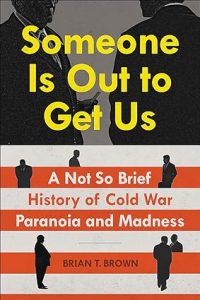
In Someone Is Out to Get Us, Brian T. Brown explores the delusions, absurdities, and best-kept secrets of the Cold War, during which the United States fought an enemy of its own making for over forty years — and nearly scared itself to death in the process. The nation chose to fear a chimera, a rotting communist empire that couldn’t even feed itself, only for it to be revealed that what lay behind the Iron Curtain was only a sad Potemkin village.

In fact, one of the greatest threats to our national security may have been our closest ally. The most effective spy cell the Soviets ever had was made up of aristocratic Englishmen schooled at Cambridge. Establishing a communist peril but lacking proof, J. Edgar Hoover became our Big Brother, and Joseph McCarthy went hunting for witches. Richard Nixon stepped into the spotlight as an opportunistic, ruthless Cold Warrior; his criminal cover-up during a dark presidency was exposed by a Deep Throat in a parking garage.

Someone Is Out to Get Us is the true and complete account of a long-misunderstood period of history during which lies, conspiracies, and paranoia led Americans into a state of madness and misunderstanding, too distracted by fictions to realize that the real enemy was looking back at them in the mirror the whole time.

Strongmen

8,500.00

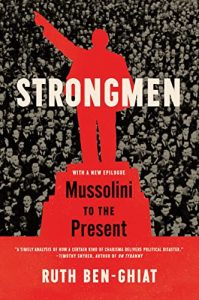
Ruth Ben-Ghiat is the expert on the “strongman” playbook employed by authoritarian demagogues from Mussolini to Putin—enabling her to predict with uncanny accuracy the recent experience in America and Europe. In Strongmen, she lays bare the blueprint these leaders have followed over the past 100 years, and empowers us to recognize, resist, and prevent their disastrous rule in the future.

For ours is the age of authoritarian rulers: self-proclaimed saviors of the nation who evade accountability while robbing their people of truth, treasure, and the protections of democracy. They promise law and order, then legitimize lawbreaking by financial, sexual, and other predators.

They use masculinity as a symbol of strength and a political weapon. Taking what you want, and getting away with it, becomes proof of male authority. They use propaganda, corruption, and violence to stay in power.

Vladimir Putin and Mobutu Sese Seko’s kleptocracies, Augusto Pinochet’s torture sites, Benito Mussolini and Muammar Gaddafi’s systems of sexual exploitation, and Silvio Berlusconi and Donald Trump’s relentless misinformation: all show how authoritarian rule, far from ensuring stability, is marked by destructive chaos.

No other type of leader is so transparent about prioritizing self-interest over the public good. As one country after another has discovered, the strongman is at his worst when true guidance is most needed by his country.

Recounting the acts of solidarity and dignity that have undone strongmen over the past 100 years, Ben-Ghiat makes vividly clear that only by seeing the strongman for what he is—and by valuing one another as he is unable to do—can we stop him, now and in the future.

Sun Tzu’s Art Of War: Modern Interpretation

4,500.00

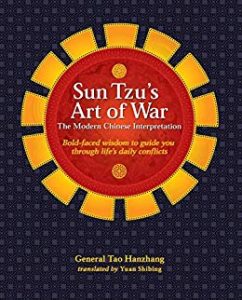
A classic! Find inspiration in some of history’s great military victories as others have for over 2,400 years. Sun Tzu was the most famous military scientist, and one of the ablest commanders, in ancient China. Asian warlords, and modern leaders as dissimilar as Mao Tse-tung and General Eisenhower, have used his principles to change the shape of the world. Interpreted here by General Tao Hanzhang, one of the architects of the Communist Revolution, Tzu’s advice on timing, maneuvering, flexibility, and knowledge of the enemy’s leaders, strengths, and weaknesses is as powerful today as when it was first issued.

Ten Lessons for a Post-Pandemic World

6,500.00

Lenin once said, “There are decades when nothing happens and weeks when decades happen.” This is one of those times when history has sped up. CNN host and best-selling author Fareed Zakaria helps readers to understand the nature of a post-pandemic world: the political, social, technological, and economic consequences that may take years to unfold. Written in the form of ten “lessons,” covering topics from natural and biological risks to the rise of “digital life” to an emerging bipolar world order, Zakaria helps readers to begin thinking beyond the immediate effects of COVID-19. Ten Lessons for a Post-Pandemic World speaks to past, present, and future, and, while urgent and timely, is sure to become an enduring reflection on life in the early twenty-first century.

The Black Panther Party

10,000.00

WINNER OF THE EISNER AWARD • A bold and fascinating graphic novel history of the revolutionary Black Panther Party.

Founded in Oakland, California, in 1966, the Black Panther Party for Self-Defense was a radical political organization that stood in defiant contrast to the mainstream civil rights movement. This gripping illustrated history explores the impact and significance of the Panthers, from their social, educational, and healthcare programs that were designed to uplift the Black community to their battle against police brutality through citizen patrols and frequent clashes with the FBI, which targeted the Party from its outset.

Using dramatic comic book-style retellings and illustrated profiles of key figures, The Black Panther Party captures the major events, people, and actions of the party, as well as their cultural and political influence and enduring legacy.

The Bomb

7,000.00

Fred Kaplan, hailed by TheNew York Times as “a rare combination of defense intellectual and pugnacious reporter,” takes us into the White House Situation Room, the Joint Chiefs of Staff’s “Tank” in the Pentagon, and the vast chambers of Strategic Command to bring us the untold stories—based on exclusive interviews and previously classified documents—of how America’s presidents and generals have thought about, threatened, broached, and just barely avoided nuclear war from the dawn of the atomic age until today.

Kaplan’s historical research and deep reporting will stand as the permanent record of politics. Discussing theories that have dominated nightmare scenarios from Hiroshima and Nagasaki, Kaplan presents the unthinkable in terms of mass destruction and demonstrates how the nuclear war reality will not go away, regardless of the dire consequences.

The Bright Continent

6,000.00

Dayo Olopade knew from personal experience that Western news reports on conflict, disease, and poverty obscure the true story of modern Africa. So she crossed sub-Saharan Africa to document how ordinary people deal with their daily challenges. She found what cable news ignores: a continent of ambitious reformers and young social entrepreneurs, driven by kanju―creativity born of African difficulty. It’s a trait found in pioneers like Kenneth Nnebue, who turned cheap VHS tapes into the multimillion-dollar film industry Nollywood. Or Ushahidi, a technology collective that crowdsources citizen activism and disaster relief.

A shining counterpoint to the conventional wisdom, The Bright Continent rewrites Africa’s challenges as opportunities to innovate and celebrates a history of doing more with less as a powerful model for the rest of the world.

The Director: My Years Assisting J. Edgar Hoover

9,500.00

The 1960s and 1970s were arguably among America’s most turbulent post-Civil War decades. While the Vietnam War continued seemingly without end, protests and riots ravaged most cities, the Kennedys and MLK were assassinated, and corruption found its way to the highest levels of politics, culminating in Watergate.

In 1965, at the beginning of the chaos, twenty-two-year-old Paul Letersky was assigned to assist the legendary FBI director J. Edgar Hoover who’d just turned seventy and had, by then, led the Bureau for an incredible forty-one years. Hoover was a rare and complex man who walked confidently among the most powerful. His personal privacy was more tightly guarded than the secret “files” he carefully collected—and that were so feared by politicians and celebrities. Through Letersky’s close working relationship with Hoover, and the trust and confidence he gained from Hoover’s most loyal senior assistant, Helen Gandy, Paul became one of the few able to enter the Director’s secretive—and sometimes perilous—world.

Since Hoover’s death half a century ago, millions of words have been written about the man and hundreds of hours of TV dramas and A-list Hollywood films produced. But until now, there has been virtually no account from someone who, for a period of years, spent hours with the Director on a daily basis.

Balanced, honest, and keenly observed, this “vivid, foibles-and-all portrait of the fabled scourge of gangsters, Klansmen, and communists” (The Wall Street Journal) sheds new light on one of the most powerful law enforcement figures in American history.

The Fortunes Of Africa

18,000.00

A sweeping history the fortune seekers, adventurers, despots, and thieves who have ruthlessly endeavored to extract gold, diamonds, and other treasures from Africa and its people.

Africa has been coveted for its rich natural resources ever since the era of the Pharaohs. In past centuries, it was the lure of gold, ivory, and slaves that drew merchant-adventurers and conquerors from afar. In modern times, the focus of attention is on oil, diamonds, and other rare earth minerals.

In this vast and vivid panorama of history, Martin Meredith follows the fortunes of Africa over a period of 5,000 years. With compelling narrative, he traces the rise and fall of ancient kingdoms and empires; the spread of Christianity and Islam; the enduring quest for gold and other riches; the exploits of explorers and missionaries; and the impact of European colonization. He examines, too, the fate of modern African states and concludes with a glimpse of their future.

His cast of characters includes religious leaders, mining magnates, warlords, dictators, and many other legendary figures-among them Mansa Musa, ruler of the medieval Mali empire, said to be the richest man the world has ever known.

The Generalissimo

12,500.00

One of the most momentous stories of the last century is China’s rise from a self-satisfied, anti-modern, decaying society into a global power that promises to one day rival the United States. Chiang Kai-shek, an autocratic, larger-than-life figure, dominates this story. A modernist as well as a neo-Confucianist, Chiang was a man of war who led the most ancient and populous country in the world through a quarter century of bloody revolutions, civil conflict, and wars of resistance against Japanese aggression.

In 1949, when he was defeated by Mao Zedong―his archrival for leadership of China―he fled to Taiwan, where he ruled for another twenty-five years. Playing a key role in the cold war with China, Chiang suppressed opposition with his “white terror,” controlled inflation and corruption, carried out land reform, and raised personal income, health, and educational levels on the island. Consciously or not, he set the stage for Taiwan’s evolution of a Chinese model of democratic modernization.

Drawing heavily on Chinese sources including Chiang’s diaries, The Generalissimo provides the most lively, sweeping, and objective biography yet of a man whose length of uninterrupted, active engagement at the highest levels in the march of history is excelled by few, if any, in modern history. Jay Taylor shows a man who was exceedingly ruthless and temperamental but who was also courageous and conscientious in matters of state. Revealing fascinating aspects of Chiang’s life, Taylor provides penetrating insight into the dynamics of the past that lie behind the struggle for modernity of mainland China and its relationship with Taiwan.

The Great Decoupling

14,000.00

For much of recorded history, China was a leading science and technology power. But just as the West rose, China turned in on itself, and missed the Industrial Revolution. The result was the ‘Hundred Years of Humiliation’, and a long struggle for a modern, yet distinctly Chinese,
civilisational identity. Today, technological innovation has returned to the core of national pride and ambition.

Since the 1980s, reforms have transformed China into the world’s second largest economy and a major global power. Cyber space and other advanced technologies have become a battleground for international dominance; but today’s world relies on global supply chains and interstate collaboration–at
least, for now. Growing tension between the USA and China could result in the two superpowers decoupling their technology–with significant consequences for humanity’s future.

The Great Decoupling shows that this technology contest, and how it plays out, will shape the geopolitics of the twenty-first century.

1 6 7 8 10