History & Geography

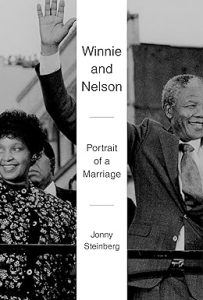
Winnie and Nelson: Portrait of a Marriage

20,000.00

One of the most celebrated political leaders of a century, Nelson Mandela has been written about by many biographers and historians. But in one crucial area, his life remains largely untold: his marriage to Winnie Madikizela-Mandela. During his years in prison, Nelson grew ever more in love with an idealized version of his wife, courting her in his letters as if they were young lovers frozen in time. But Winnie, every bit his political equal, found herself increasingly estranged from her jailed husband’s politics. Behind his back, she was trying to orchestrate an armed seizure of power, a path he feared would lead to an endless civil war.

Jonny Steinberg tells the tale of this unique marriage—its longings, its obsessions, its deceits—making South African history a page-turning political biography. Winnie and Nelson is a modern epic in which trauma doesn’t affect just the couple at its center, but an entire nation. It is also a Shakespearean drama in which bonds of love and commitment mingle with timeless questions of revolution, such as whether to seek retribution or a negotiated peace. Steinberg reveals, with power and tender emotional insight, how far these forever-entwined leaders would go for each other and where they drew the line. For in the end, both knew theirs was not simply a marriage, but a contest to decide how apartheid should be fought.
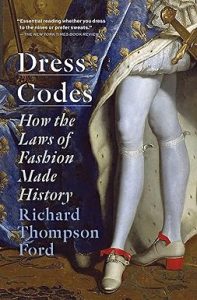
Dress Codes

20,000.00

Dress codes are as old as clothing itself. For centuries, clothing has been a wearable status symbol; fashion, a weapon in struggles for social change; and dress codes, a way to maintain political control. Merchants dressing like princes and butchers’ wives wearing gem-encrusted crowns were public enemies in medieval societies structured by social hierarchy and defined by spectacle. In Tudor England, silk, velvet, and fur were reserved for the nobility, and ballooning pants called “trunk hose” could be considered a menace to good order. The Renaissance-era Florentine patriarch Cosimo de Medici captured the power of fashion and dress codes when he remarked, “One can make a gentleman from two yards of red cloth.” Dress codes evolved along with the social and political ideals of the day, but they always reflected struggles for power and status. In the 1700s, South Carolina’s “Negro Act” made it illegal for Black people to dress “above their condition.” In the 1920s, the bobbed hair and form-fitting dresses worn by free-spirited flappers were banned in workplaces throughout the United States, and in the 1940s, the baggy zoot suits favored by Black and Latino men caused riots in cities from coast to coast.

Even in today’s more informal world, dress codes still determine what we wear, when we wear it—and what our clothing means. People lose their jobs for wearing braided hair, long fingernails, large earrings, beards, and tattoos or refusing to wear a suit and tie or make-up and high heels. In some cities, wearing sagging pants is a crime. And even when there are no written rules, implicit dress codes still influence opportunities and social mobility. Silicon Valley CEOs wear t-shirts and flip-flops, setting the tone for an entire industry: women wearing fashionable dresses or high heels face ridicule in the tech world, and some venture capitalists refuse to invest in any company run by someone wearing a suit.

In Dress Codes, law professor and cultural critic Richard Thompson Ford presents a “deeply informative and entertaining” (The New York Times Book Review) history of the laws of fashion from the middle ages to the present day, a walk down history’s red carpet to uncover and examine the canons, mores, and customs of clothing—rules that we often take for granted. After reading Dress Codes, you’ll never think of fashion as superficial again—and getting dressed will never be the same.

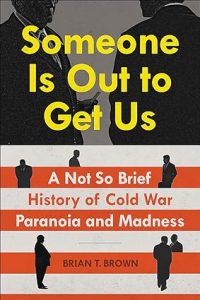
Someone Is Out To Get Us

20,000.00

In Someone Is Out to Get Us, Brian T. Brown explores the delusions, absurdities, and best-kept secrets of the Cold War, during which the United States fought an enemy of its own making for over forty years — and nearly scared itself to death in the process. The nation chose to fear a chimera, a rotting communist empire that couldn’t even feed itself, only for it to be revealed that what lay behind the Iron Curtain was only a sad Potemkin village.

In fact, one of the greatest threats to our national security may have been our closest ally. The most effective spy cell the Soviets ever had was made up of aristocratic Englishmen schooled at Cambridge. Establishing a communist peril but lacking proof, J. Edgar Hoover became our Big Brother, and Joseph McCarthy went hunting for witches. Richard Nixon stepped into the spotlight as an opportunistic, ruthless Cold Warrior; his criminal cover-up during a dark presidency was exposed by a Deep Throat in a parking garage.

Someone Is Out to Get Us is the true and complete account of a long-misunderstood period of history during which lies, conspiracies, and paranoia led Americans into a state of madness and misunderstanding, too distracted by fictions to realize that the real enemy was looking back at them in the mirror the whole time.

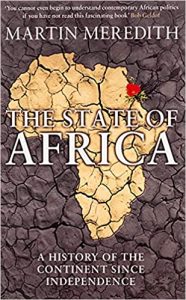
The State Of Africa

23,000.00

Africa is forever on our TV screens, but the bad-news stories (famine, genocide, corruption) massively outweigh the good (South Africa). Ever since the process of decolonialisation began in the mid-1950s, and arguably before, the continent has appeared to be stuck in a process of irreversible decline. Constant war, improper use of natural resources and misappropriation of revenues and aid monies contribute to an impression of a continent beyond hope. How did we get here?

What, if anything, is to be done? Weaving together the key stories and characters of the last fifty years into a stunningly compelling and coherent narrative, Martin Meredith has produced the definitive history of how European ideas of how to organise 10,000 different ethnic groups has led to what Tony Blair described as the ‘scar on the conscience of the world’. Authoritative, provocative and consistently fascinating, this is a major book on one of the most important issues facing the West today.

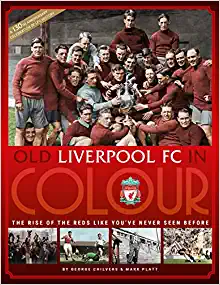
Old Liverpool FC In Colour

25,000.00

A 130th ANNIVERSARY CELEBRATION OF LFC HISTORY WITH OVER 130 HISTORIC IMAGES EXPERTLY COLOURISED IN THE FIRST OFFICIAL LIVERPOOL FC BOOK OF ITS KIND

From humble origins to Kings of Europe, retrace the remarkable rise of Liverpool Football Club just as it would have been viewed by those who witnessed it first-hand in years gone by.

‘Old Liverpool FC In Colour’ delves deep into the archives to shed new light on a fascinating narrative, one that is brought to life through the expert colourisation of 130 stunning photographs, many of which have never been published before.

With meticulous research complementing every image, you will be taken on a nostalgic and educational journey through the initial 100 years of the club’s existence – when football really was the people’s game.

A passionately crafted celebration of Liverpool’s illustrious history, it is the first publication of its kind; a vivid insight into an era that, until now, had been predominantly documented only in black-and-white. Be transported back in time to what is fast becoming an almost forgotten age and immerse yourself in the LFC story as it unfolded back then. Let the pictures place you at scene like never before and see Liverpool through the eyes of your ancestors.

Relive the moments that helped shape the future and learn more about the big games and famous names; the titles, trophies and trips to far foreign lands; the key figures who lay the foundations and those who built on them, the iconic teams of the past and the supporters whose footsteps you follow in. All brought together in glorious colour for the very first time!

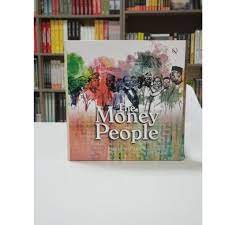
The Money People

25,000.00

Money is more than just a medium of exchange; it is an important part of a country’s national identity. While many are aware of the use of barter, cowries and manillas for trading in the olden days, there are other early currencies that will come as a surprise to this generation, including hoes, iron bars, sticks, cloth and even feathers.

The kobo coin has been devalued over time due to inflation but, like the naira, it has a fascinating history.

The Money People gives a visual and comprehensive history of money, a factual summary of a branch of Nigerian history. It chronicles the history of money in Nigeria, the pre-colonial era of barter to the digital era of electronic banking.

The Money People explores the backgrounds of the national heroes and their contribution to the nation, which remains their legacy, and also examines the symbols commemorated on our past and present currencies.

Gordon Ramsey’s Uncharted

25,000.00

From the heights of the Peruvian Andes to the banks of the Mekong River Delta in Laos, celebrity chef Gordon Ramsay has traveled far and wide to find culinary inspiration in some of the world’s most remote locations. In this travelogue-meets-cookbook, Ramsay reveals the rich food traditions and cultures he’s found in 25 remarkable destinations from his explorations on the National Geographic Channel’s Gordon Ramsay: Uncharted.

Within these mouthwatering pages, you’ll find insights into some of the world’s richest cultures, behind-the-scenes stories from filming, tips from top chefs around the world, and must-try adventures in places near and far. Best of all, you’ll be served 60 authentic recipes that are easy to achieve at home

Formation: The Making of Nigeria from Jihad to Amalgamation

25,000.00

Formation tracks the unlikely series of events and characters that led to the creation of the modern Nigerian nation: from 1804 when the first Jihadists began their attack on a collection of independent nations to 1914 when the current shape of Nigeria was completed as a British colony through amalgamation. Formation challenges the orthodox understanding of Nigeria’s past as merely a product of colonial interference, revealing an incredibly complicated portrait of a nation with a tangled history, where slavery, violence and instability was and remains a primary organising principle for elite competition and political negotiations.

Influential figures loom large over the narrative including: Usman dan Fodio, the revolutionary Islamic reformer and founder of the Sokoto Caliphate, Efunroye Tinubu, the prominent slave-trader and political figure, Fredrick Lugard, British colonial administrator, Nana Asma’u, revered poet and teacher, Samuel Ajayi-Crowther, Yoruba linguist and first Nigerian Anglican Bishop, Funmilayo Ransome-Kuti, political campaigner, suffragist and mother to Fela Kuti, maverick British statesman and industrialist, Joseph Chamberlain, alongside other well-known and many less familiar names. Formation uses colourful character sketches and first-hand reporting to show how local events and characters are intertwined with global occurrences over the period.

Narcas: The Secret Rise of Women in Latin America’s Cartels

25,000.00

VICE journalist Deborah Bonello reports from the trenches in this first-ever in-depth exploration of the hidden power women wield in Latin American drug cartels

You’ve heard of Pablo Escobar, Joaquin “El Chapo” Guzman, and Rafael Caro Quintero. Their names conjure ghoulish images of bloody streets, white powder, bundles of weed, and a particular flavor of machismo unique to ruthless druglords. But what of the drugladies, las narcas? For the first time, investigative reporter Deborah Bonello takes you behind the curtain to introduce the women at the helm of organized crime south of the US-Mexico border. These women are the powerhouses behind violent cartels; masterminds of extortion rackets; right-hand ladies to El Chapo’s cocaine flow to the US; and matriarchs of major drug trafficking families. In these pages, you will meet women like Doña Digna, the leader of the Valle cartel, and Guadalupe Fernandez Valencia, one of “El Chapo” Guzman’s closest confidants.

Narcas, for the first time, gives voice to the women of notorious drug-trafficking monarchies, meticulously documenting the variety of roles they play. Bonello chronicles the complexity of their actions and their desires, the grey chasm between victims and victimizers, co-option and agency, and right and wrong. She examines why women’s experiences are under-reported, emphasizing the importance of understanding women as fully capable beings who are often as ambitious, innovative, ruthless, and violent as their male counterparts.

With careful detail, comprehensive research, and groundbreaking storytelling, Narcas paints a vivid picture of the women behind some of the most notorious drug cartels. You will not see Sebastiana Cottón or Marixa Lemus in the stereotypical portrayals of beautiful narco wives or girlfriends, or in the faces of trafficking survivors or drug mules. Rather, you’ll encounter—at staggering rates—the female cartel killers, money launderers, logistical heads, and transporters of Latin America’s infamous crime syndicates.

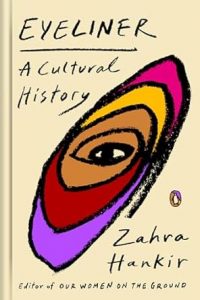
Eyeliner: A Cultural History

25,000.00

From the distant past to the present, with fingers and felt-tipped pens, metallic powders and gel pots, humans have been drawn to lining their eyes. The aesthetic trademark of figures ranging from Nefertiti to Amy Winehouse, eyeliner is one of our most enduring cosmetic tools; ancient royals and Gen Z beauty influencers alike would attest to its uniquely transformative power. It is undeniably fun—yet it is also far from frivolous.

Seen through Zahra Hankir’s (kohl-lined) eyes, this ubiquitous but seldom-examined product becomes a portal to history, proof both of the stunning variety among cultures across time and space and of our shared humanity. Through intimate reporting and conversations—with nomads in Chad, geishas in Japan, dancers in India, drag queens in New York, and more—Eyeliner embraces the rich history and significance of its namesake, especially among communities of color. What emerges is an unexpectedly moving portrait of a tool that, in various corners of the globe, can signal religious devotion, attract potential partners, ward off evil forces, shield eyes from the sun, transform faces into fantasies, and communicate volumes without saying a word.

Delightful, surprising, and utterly absorbing, Eyeliner is a fascinating tour through streets, stages, and bedrooms around the world, and a thought-provoking reclamation of a key piece of our collective history.

The Exorcist Legacy

25,000.00

On December 26, 1973, The Exorcist was released. Within days it had become legend. Moviegoers braved hours-long lines in winter weather to see it. Some audience members famously fainted or vomited. Half a century later, the movie that both inspired and transcends the modern horror genre has lost none of its power to terrify and unsettle.

The Exorcist Legacy reveals the complete story of this cultural phenomenon, from the real-life exorcism in 1949 Maryland that inspired William Peter Blatty’s bestselling novel on which the movie is based, to its many sequels, prequels, TV series, and homages. Nat Segaloff, biographer of the film’s director, William Friedkin, draws on original interviews with cast, crew, and participants as well as revelations from personal papers to present an intriguing and surprising new view of the making of the movie, and its aftermath.

Segaloff also examines as never before the keys to the movie’s enduring appeal. Friedkin and Blatty’s goal was far more ambitious than making a scary movie; they aimed to make people “think about the concept of good and evil.” The Exorcist succeeds, and then some, not just by creating on-screen scares, but by challenging viewers’ deepest personal beliefs—and fears.

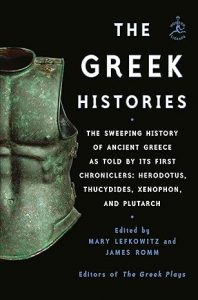
The Greek Histories

25,000.00

The historians of ancient Greece were pioneers of a new literary craft; their work stands among the world’s most enduring and important legacies and forms the foundation of a major modern discipline. This highly readable edition includes new and newly revised translations of selections from Herodotus—often called the “father of history”—Thucydides, Xenophon, and Plutarch, the four greatest Greek innovators of historical narrative. Here the reader will find their most important, and most widely taught, passages collected in a single volume. The excerpts chart the landmark events of ancient Greece and provide a comprehensive account of the entire classical Greek age.

From the start the Greek historians demonstrated how broad and varied historical writing could be and brought their craft beyond a mere chronicle of past events. This volume explores each author’s interest in religion, leadership, character, and the lessons of war. How, for instance, should readers interpret Herodotus’ inclusion of speeches and dialogues, dreams, and oracles as part of the “factual” record? What did Thucydides understand about human nature that (as he said) stays constant throughout time? How did Plutarch frame historical biography as a means of depicting the moral qualities of great men?

Complete with introductions to the works of each historian, footnotes providing context and explaining obscurities, maps, and an appendix on the Greek conduct of war, this volume is an invaluable resource for students and passionate readers of history alike.

1 9 10 11