
Business & Economics

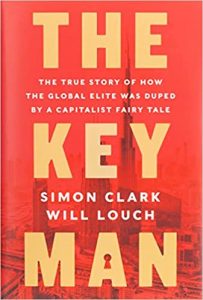
The Key Man

₦9,000.00

In this compelling story of lies, greed and tarnished idealism, two Wall Street Journal reporters investigate a man who Bill Gates, Western governments, and other investors entrusted with billions of dollars to make profits and end poverty, but who now stands accused of masterminding one of the biggest, most brazen financial frauds ever.

Arif Naqvi was charismatic, inspiring, and self-made—all the qualities of a successful business leader. The founder of Abraaj, a Dubai-based private-equity firm, Naqvi was the Key Man to the global elite searching for impact investments to make money and do good. He persuaded politicians he could help stabilize the Middle East after 9/11 by providing jobs and guided executives to opportunities in cities they struggled to find on the map. Bill Gates helped him start a $1 billion fund to improve healthcare in poor countries and the UN and Interpol appointed him to boards. As Pope Francis blessed a move to harness capitalism for the good of the poor, Naqvi won the support of Obama’s administration and investors, who compared him to Tom Cruise in Mission: Impossible.

In 2018, Simon Clark and Will Louch were contacted by an anonymous whistleblower who said Naqvi had swindled investors out of hundreds of millions of dollars and offered bribes to sustain his billionaire lifestyle. Digging into the claims, Clark and Louch uncovered hundreds of documents and exposed the wrongdoing. In April 2019—months after their exposé broke—Naqvi was arrested on charges of fraud and racketeering, and faces up to 291 years in jail.

Populated by a cast of larger-than-life characters and moving across Asia, Africa, Europe and America, The Key Man is the story of how the global elite was duped by a capitalist fairytale. Clark and Louch shine a light on efforts to clean up global capital flows even as opaque private equity firms amass trillions of dollars and offshore tax havens cast a veil of secrecy which prevents regulators, investors and citizens from understanding what’s really going on in the finance industry.

Principles

₦12,500.00

In 1975, Ray Dalio founded an investment firm, Bridgewater Associates, out of his two-bedroom apartment in New York City. Forty years later, Bridgewater has made more money for its clients than any other hedge fund in history and grown into the fifth most important private company in the United States, according to Fortune magazine. Dalio himself has been named to Time magazine’s list of the 100 most influential people in the world. Along the way, Dalio discovered a set of unique principles that have led to Bridgewater’s exceptionally effective culture, which he describes as “an idea meritocracy that strives to achieve meaningful work and meaningful relationships through radical transparency.” It is these principles, and not anything special about Dalio—who grew up an ordinary kid in a middle-class Long Island neighborhood—that he believes are the reason behind his success.

In Principles, Dalio shares what he’s learned over the course of his remarkable career. He argues that life, management, economics, and investing can all be systemized into rules and understood like machines. The book’s hundreds of practical lessons, which are built around his cornerstones of “radical truth” and “radical transparency,” include Dalio laying out the most effective ways for individuals and organizations to make decisions, approach challenges, and build strong teams. He also describes the innovative tools the firm uses to bring an idea meritocracy to life, such as creating “baseball cards” for all employees that distill their strengths and weaknesses, and employing computerized decision-making systems to make believability-weighted decisions. While the book brims with novel ideas for organizations and institutions, Principles also offers a clear, straightforward approach to decision-making that Dalio believes anyone can apply, no matter what they’re seeking to achieve.

The Long And The Short Of It

₦5,500.00

The follies of finance have threatened the stability of the global economy, and the world of finance has become increasingly complex and sophisticated, but also greedy, cynical and self-interested. The Long and the Short of It provides a guide to the complexities of modern finance and explains how to put your finances in the only hands you can confidently trust – your own.
In this new, wholly updated edition of The Long and the Short of It, you will learn everything you need to be your own investment manager. You will recognise your investment options, the institutions that try to sell them, and how to distinguish between fact and fiction in what companies say. You will discover the principles of sound investment and the research that supports these principles. Crucially, you will learn a practical investment strategy and how to implement it.

Leading economist and hugely successful investor John Kay uses his academic credentials and practical experience to lay out the key principles of investment with characteristic clarity and dry humour. This is the only book about finance and investment anyone needs, and the one book they must have.

What They Don’t Teach You At Harvard Business School

₦5,500.00

Mark H. McCormack, one of the most successful entrepreneurs in American business, is widely credited as the founder of the modern-day sports marketing industry. On a handshake with Arnold Palmer and less than a thousand dollars, he started International Management Group and, over a four-decade period, built the company into a multimillion-dollar enterprise with offices in more than forty countries.

To this day, McCormack’s business classic remains a must-read for executives and managers at every level. Relating his proven method of “applied people sense”in key chapters on sales, negotiation, reading others and yourself, and executive time management, McCormack presents powerful real-world guidance on

• the secret life of a deal
• management philosophies that don’t work (and one that does)
• the key to running a meeting—and how to attend one
• the positive use of negative reinforcement
• proven ways to observe aggressively and take the edge
• and much more

The Microsoft Story

₦7,000.00

It wasn’t so long ago that Microsoft and its Windows operating system dominated the tech industry so much so that they faced antitrust charges for what was perceived by many to be predatory, monopolistic practices. Less than a decade later, the tide had turned and Microsoft lost its dominance in the personal tech marketplace amidst the launch of the iPhone, the rise of Google, and the cloud computing phenomenon.

But, now, Microsoft is back on top. The company’s value is soaring and once again Microsoft is being recognized as a tech leader once again. What changed?

Since Satya Nadella took over as CEO, the company has gone through significant changes. The company culture has become one of creativity and innovation, no longer requiring that all products revolve around Windows. The company has reevaluated their business lines, getting rid of underperforming initiatives such as smartphones, and focused on the area of growth where the company excelled:the cloud.

Through the story of Microsoft, you’ll learn:

– How to build a nimble company culture that supports innovation and growth.
– How to return a forgotten brand to the spotlight.
– How to recognize and build upon successful business lines, while letting go of underperforming initiatives.
– When to change the entire way you do business.
And much, much more.

Retail’s Seismic Shift

₦8,500.00

For one hundred years, retail was designed for the car―buildings and malls to travel to. Now it is designed for the mobile smart device―for consumers to travel with. In a world with an overabundance of material goods, consumer values and the drivers of retail success are being radically redefined. The smartphone has created a world of limitless expectation and logistical possibility: What will the retail experience look like in ten, twenty, or even fifty years―and how should all companies be preparing?

Industry experts Michael Dart and Robin Lewis identify the major trends in our economy that will shape the future of retail and determine who wins. Imagine aworld where entertainment, experience, or values matter more than the product. We are approaching the time in which distribution begins and ends with the consumer, mass markets give way to fragmented markets, and the necessity of entirely new business models is paramount. Amazon, Uber, and AirBnB are just the beginning; new technologies will continue to grow and uproot existing business models. And now, with the emergence of the technology-empowered young consumer culture, retailers will be forced to transform their offerings.

The 4-Hour Workweek

₦7,500.00

Forget the old concept of retirement and the rest of the deferred-life plan–there is no need to wait and every reason not to, especially in unpredictable economic times. Whether your dream is escaping the rat race, experiencing high-end world travel, or earning a monthly five-figure income with zero management, The 4-Hour Workweek is the blueprint.

This step-by-step guide to luxury lifestyle design teaches:
• How Tim went from $40,000 per year and 80 hours per week to $40,000 per month and 4 hours per week
• How to outsource your life to overseas virtual assistants for $5 per hour and do whatever you want
• How blue-chip escape artists travel the world without quitting their jobs
• How to eliminate 50% of your work in 48 hours using the principles of a forgotten Italian economist
• How to trade a long-haul career for short work bursts and frequent “mini-retirements”

The new expanded edition of Tim Ferriss’ The 4-Hour Workweek includes:
• More than 50 practical tips and case studies from readers (including families) who have doubled income, overcome common sticking points, and reinvented themselves using the original book as a starting point
• Real-world templates you can copy for eliminating e-mail, negotiating with bosses and clients, or getting a private chef for less than $8 a meal
• How Lifestyle Design principles can be suited to unpredictable economic times
• The latest tools and tricks, as well as high-tech shortcuts, for living like a diplomat or millionaire without being either

Retail Disruptors

₦8,000.00

Hard discounters are stores that sell a limited selection of consumer packaged goods and perishables – typically fewer than 2,000 Stock Keeping Units – for prices that are usually 50-60% lower than national brands. The best known hard discounters are Aldi and Lidl, but global brands include Trader Joe’s, EuroSpin, Biedronka, Netto and Leader Price. Their rise has been monumental; they have irrevocably changed the face of retail in Europe and Australia, and are making steady inroads into the US. Retail Disruptors explores the very real threat that hard discounters pose to traditional retailers and brand manufacturers.

Retail Disruptors is the first book that explores this upheaval, providing expert insight into the business models of the leading hard discounters, and what mainstream retailers and brand manufacturers can do to remain competitive in the face of disruption. Meticulously researched by two of the leading authorities in retail strategy, private labels, branding, and hard discounting, Retail Disruptors is essential reading for all brand manufacturers and retailers who want to retain the competitive edge.

Amazon Unbound

₦10,000.00

Almost ten years ago, Bloomberg journalist Brad Stone captured the rise of Amazon in his bestseller The Everything Store. Since then, Amazon has expanded exponentially, inventing novel products like Alexa and disrupting countless industries, while its workforce has quintupled in size and its valuation has soared to nearly two trillion dollars. It’s almost impossible to go a day without encountering the impact of Jeff Bezos’s Amazon, between services like Whole Foods, Prime Video, and Amazon’s cloud computing unit, AWS, plus Bezos’s ownership of The Washington Post. We live in a world run, supplied, and controlled by Amazon and its iconoclast founder.

In Amazon Unbound, Brad Stone presents an “excellent” (The New York Times), deeply reported, vividly drawn portrait of how a retail upstart became of the most powerful and feared entities in the global economy. Stone also probes the evolution of Bezos himself—who started as a geeky technologist totally devoted to building Amazon, but who transformed to become a fit, disciplined billionaire with global ambitions, who ruled Amazon with an iron fist, even as he found his personal life splashed over the tabloids.

Definitive, timely, and “engaging” (Jon Meacham, author of The Soul of America), Stone has provided an unvarnished portrait of a man and company that we couldn’t imagine modern life without.

Talent Is Overrated

₦7,000.00

Why are certain people so incredibly great at what they do? Most of us think we know the answer—but we’re almost always wrong. That’s important, because if we’re wrong on this crucial question, then we have zero chance of getting significantly better at anything we care about.

Happily, the real source of great performance is no longer a mystery. Bringing together extensive scientific research, bestselling author Geoff Colvin shows where we go wrong and what actually makes world-class performers so remarkable. It isn’t specific, innate talent, nor is it plain old hard work. It’s a very specific type of work that anyone can do—but most people don’t.

What’s more, the principles of great performance apply to virtually any activity that matters to you. Readers worldwide have been inspired by this book’s liberating message: You don’t need a one-in-a-million natural gift. Better performance, and maybe even world-class performance, is closer than you think.

Hooked

₦29,000.00

Why do some products capture widespread attention while others flop? What makes us engage with certain products out of sheer habit? Is there a pattern underlying how technologies hook us?
Nir Eyal answers these questions (and many more) by explaining the Hook Model—a four-step process embedded into the products of many successful companies to subtly encourage customer behavior. Through consecutive “hook cycles,” these products reach their ultimate goal of bringing users back again and again without depending on costly advertising or aggressive messaging.

Hooked is based on Eyal’s years of research, consulting, and practical experience. He wrote the book he wished had been available to him as a start-up founder—not abstract theory, but a how-to guide for building better products. Hooked is written for product managers, designers, marketers, start-up founders, and anyone who seeks to understand how products influence our behavior.

Eyal provides readers with:

• Practical insights to create user habits that stick.
• Actionable steps for building products people love.

• Fascinating examples from the iPhone to Twitter, Pinterest to the Bible App, and many other habit-forming products.

The Richest Man In Babylon

₦5,000.00

The Richest Man in Babylon, based on “Babylonian parables”, has been hailed as the greatest of all inspirational works on the subject of thrift, financial planning, and personal wealth. In simple language, these fascinating and informative stories set you on a sure path to prosperity and its accompanying joys. A celebrated bestseller, it offers an understanding and a solution to your personal financial problem. Revealed inside are the secrets to acquiring money, keeping money, and making money earn more money.

Way Of The Wolf

₦6,500.00

Jordan Belfort—immortalized by Leonardo DiCaprio in the hit movie The Wolf of Wall Street—reveals the step-by-step sales and persuasion system proven to turn anyone into a sales-closing, money-earning rock star.

For the first time ever, Jordan Belfort opens his playbook and gives you access to his exclusive step-by-step system—the same system he used to create massive wealth for himself, his clients, and his sales teams. Until now this revolutionary program was only available through Jordan’s $1,997 online training. Now, in Way of the Wolf, Belfort is ready to unleash the power of persuasion to a whole new generation, revealing how anyone can bounce back from devastating setbacks, master the art of persuasion, and build wealth. Every technique, every strategy, and every tip has been tested and proven to work in real-life situations.

Written in his own inimitable voice, Way of the Wolf cracks the code on how to persuade anyone to do anything, and coaches readers—regardless of age, education, or skill level—to be a master sales person, negotiator, closer, entrepreneur, or speaker.

Innovation And Entrepreneurship

₦5,500.00

Based on an in-depth analysis of over 2,600 leaders drawn from a database of more than 17,000 CEOs and C-suite executives, as well 13,000 hours of interviews, and two decades of experience advising CEOs and executive boards, Elena L. Botelho and Kim R. Powell overturn the myths about what it takes to get to the top and succeed.

Their groundbreaking research was the featured cover story in the May-June 2017 issue of Harvard Business Review. It reveals the common attributes and counterintuitive choices that set apart successful CEOs—lessons that we can apply to our own careers.

Much of what we hear about who gets to the top, and how, is wrong. Those who become chief executives set their sights on the C-suite at an early age. In fact, over 70 percent of the CEOs didn’t have designs on the corner office until later in their careers. You must graduate from an elite college. In fact, only 7 percent of CEOs in the dataset are Ivy League graduates–and 8 percent didn’t graduate from college at all. To become a CEO you need a flawless résumé. The reality: 45 percent of CEO candidates had at least one major career blowup.

What those who reach the top do share are four key behaviors that anyone can master: they are decisive; they are reliable, delivering what they promised when the promise it, without exception; they adapt boldly, and they engage with stakeholders without shying away from conflict.

Based on this breakthrough study of the most successful people in business, Botelho and Powell offer career advice for everyone who aspires to get ahead.

The CEO Next Door

₦6,500.00

Based on an in-depth analysis of over 2,600 leaders drawn from a database of more than 17,000 CEOs and C-suite executives, as well 13,000 hours of interviews, and two decades of experience advising CEOs and executive boards, Elena L. Botelho and Kim R. Powell overturn the myths about what it takes to get to the top and succeed.

Their groundbreaking research was the featured cover story in the May-June 2017 issue of Harvard Business Review. It reveals the common attributes and counterintuitive choices that set apart successful CEOs—lessons that we can apply to our own careers.

Much of what we hear about who gets to the top, and how, is wrong. Those who become chief executives set their sights on the C-suite at an early age. In fact, over 70 percent of the CEOs didn’t have designs on the corner office until later in their careers. You must graduate from an elite college. In fact, only 7 percent of CEOs in the dataset are Ivy League graduates–and 8 percent didn’t graduate from college at all. To become a CEO you need a flawless résumé. The reality: 45 percent of CEO candidates had at least one major career blowup.

What those who reach the top do share are four key behaviors that anyone can master: they are decisive; they are reliable, delivering what they promised when the promise it, without exception; they adapt boldly, and they engage with stakeholders without shying away from conflict.

Based on this breakthrough study of the most successful people in business, Botelho and Powell offer career advice for everyone who aspires to get ahead.

The New Confessions Of An Economic Hitman

₦6,000.00

Former economic hit man John Perkins shares new details about the ways he and others cheated countries around the globe out of trillions of dollars. Then he reveals how the deadly EHM cancer he helped create has spread far more widely and deeply than ever in the US and everywhere else—to become the dominant system of business, government, and society today. Finally, he gives an insider view of what we each can do to change it.

Economic hit men are the shock troops of what Perkins calls the corporatocracy, a vast network of corporations, banks, colluding governments, and the rich and powerful people tied to them. If the EHMs can’t maintain the corrupt status quo through nonviolent coercion, the jackal assassins swoop in. The heart of this book is a completely new section, over 100 pages long, that exposes the fact that all the EHM and jackal tools—false economics, false promises, threats, bribes, extortion, debt, deception, coups, assassinations, unbridled military power—are used around the world today exponentially more than during the era Perkins exposed over a decade ago.

As dark as the story gets, this reformed EHM also provides hope. Perkins offers specific actions each of us can take to transform what he calls a failing Death Economy into a Life Economy that provides sustainable abundance for all.

1 … 31 32 33 … 40