


Influence Is Your Superpower
₦18,500.00You were born influential. But then you were taught to suppress that power, to follow the rules, to wait your turn, to not make waves. Award-winning Yale professor Zoe Chance will show you how to rediscover the superpower that brings great ideas to life.
Influence doesn’t work the way you think because you don’t think the way you think. Move past common misconceptions—such as the idea that asking for more will make people dislike you—and understand why your go-to negotiation strategies are probably making you less influential. Discover the one thing that influences behavior more than anything else. Learn to cultivate charisma, negotiate comfortably and creatively, and spot manipulators before it’s too late. Along the way, you’ll meet alligators, skydivers, a mind reader in a gorilla costume, Jennifer Lawrence, Genghis Khan, and the man who saved the world by saying no.
Influence Is Your Superpower will teach you how to transform your life, your organization, and perhaps even the course of history. It’s an ethical approach to influence that will make life better for everyone, starting with you.
What You Do Is Who You Are
₦19,000.00What You Do Is Who You Are explains how to make your culture purposeful by spotlighting four models of leadership and culture-building―the leader of the only successful slave revolt, Haiti’s Toussaint Louverture; the Samurai, who ruled Japan for seven hundred years and shaped modern Japanese culture; Genghis Khan, who built the world’s largest empire; and Shaka Senghor, a man convicted of murder who ran the most formidable prison gang in the yard and ultimately transformed prison culture.
Horowitz connects these leadership examples to modern case-studies, including how Louverture’s cultural techniques were applied (or should have been) by Reed Hastings at Netflix, Travis Kalanick at Uber, and Hillary Clinton, and how Genghis Khan’s vision of cultural inclusiveness has parallels in the work of Don Thompson, the first African-American CEO of McDonalds, and of Maggie Wilderotter, the CEO who led Frontier Communications. Horowitz then offers guidance to help any company understand its own strategy and build a successful culture.
What You Do Is Who You Are is a journey through culture, from ancient to modern. Along the way, it answers a question fundamental to any organization: who are we? How do people talk about us when we’re not around? How do we treat our customers? Are we there for people in a pinch? Can we be trusted?
Who you are is not the values you list on the wall. It’s not what you say in company-wide meeting. It’s not your marketing campaign. It’s not even what you believe. Who you are is what you do. This book aims to help you do the things you need to become the kind of leader you want to be―and others want to follow.
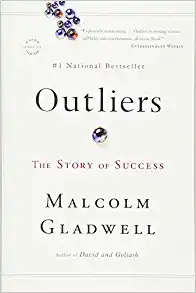
Outliers: The Story of Success
₦20,000.00In this stunning new book, Malcolm Gladwell takes us on an intellectual journey through the world of “outliers”–the best and the brightest, the most famous and the most successful. He asks the question: what makes high-achievers different?
His answer is that we pay too much attention to what successful people are like, and too little attention to where they are from: that is, their culture, their family, their generation, and the idiosyncratic experiences of their upbringing. Along the way he explains the secrets of software billionaires, what it takes to be a great soccer player, why Asians are good at math, and what made the Beatles the greatest rock band.
Brilliant and entertaining, Outliers is a landmark work that will simultaneously delight and illuminate.

Blink
₦20,000.00In his landmark bestseller The Tipping Point, Malcolm Gladwell redefined how we understand the world around us. Now, in Blink, he revolutionizes the way we understand the world within.
Blink is a book about how we think without thinking, about choices that seem to be made in an instant-in the blink of an eye-that actually aren’t as simple as they seem. Why are some people brilliant decision makers, while others are consistently inept? Why do some people follow their instincts and win, while others end up stumbling into error? How do our brains really work-in the office, in the classroom, in the kitchen, and in the bedroom? And why are the best decisions often those that are impossible to explain to others?
In Blink we meet the psychologist who has learned to predict whether a marriage will last, based on a few minutes of observing a couple; the tennis coach who knows when a player will double-fault before the racket even makes contact with the ball; the antiquities experts who recognize a fake at a glance. Here, too, are great failures of “blink”: the election of Warren Harding; “New Coke”; and the shooting of Amadou Diallo by police.
Blink reveals that great decision makers aren’t those who process the most information or spend the most time deliberating, but those who have perfected the art of “thin-slicing”-filtering the very few factors that matter from an overwhelming number of variables.
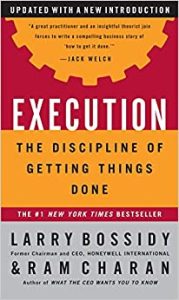
Execution: The Discipline Of Getting Things Done
₦20,000.00When Execution was first published, it changed the way we did our jobs by focusing on the critical importance of “the discipline of execution”: the ability to make the final leap to success by actually getting things done. Larry Bossidy and Ram Charan now reframe their empowering message for a world in which the old rules have been shattered, radical change is becoming routine, and the ability to execute is more important than ever. Now and for the foreseeable future
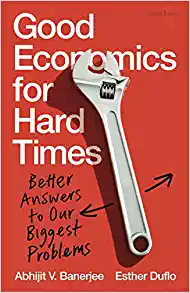
Good Economics For Hard Times
₦20,000.00Figuring out how to deal with today’s critical economic problems is perhaps the great challenge of our time. Much greater than space travel or perhaps even the next revolutionary medical breakthrough, what is at stake is the whole idea of the good life as we have known it.
Immigration and inequality, globalization and technological disruption, slowing growth and accelerating climate change–these are sources of great anxiety across the world, from New Delhi and Dakar to Paris and Washington, DC. The resources to address these challenges are there–what we lack are ideas that will help us jump the wall of disagreement and distrust that divides us. If we succeed, history will remember our era with gratitude; if we fail, the potential losses are incalculable.
In this revolutionary book, renowned MIT economists Abhijit V. Banerjee and Esther Duflo take on this challenge, building on cutting-edge research in economics explained with lucidity and grace. Original, provocative, and urgent, Good Economics for Hard Times makes a persuasive case for an intelligent interventionism and a society built on compassion and respect. It is an extraordinary achievement, one that shines a light to help us appreciate and understand our precariously balanced world.
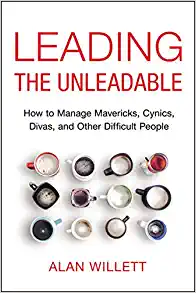
Leading The Unleadable
₦20,000.00Control freaks. Narcissists. Slackers. Cynics. Their outbursts, irrational demands, gripes, and countless other disruptions need to be dealt with, and you are the unlucky one with that job description.
This book turns this seemingly difficult chore into a straight-forward process that gently, yet effectively, improves behaviors. It all begins with understanding a core truth: most people actually want to contribute results, not cause headaches. When the manager resets to that fundamental principle, the potential for change can reveal itself in even the most hopeless situations.
Written by tech industry expert Alan Willett, Leading the Unleadable explains how to:
-Master the necessary mindset
-Explain the problem calmly in a short feedback session
-Get a commitment to change, then follow up
-Coach others to replicate the process
-Develop the situational awareness required to spot future trouble before it hits
Are you a great manager? Of course you believe you are. So don’t just put up with your difficult employees. Anyone can do that.
Turn them into the tremendous team players everyone wants them to be!
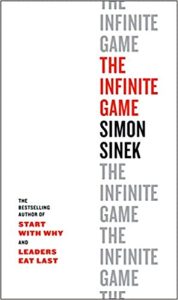
The Infinite Game
₦20,000.00How do we win a game that has no end? Finite games, like football or chess, have known players, fixed rules and a clear endpoint. The winners and losers are easily identified. Infinite games, games with no finish line, like business or politics, or life itself, have players who come and go. The rules of an infinite game are changeable while infinite games have no defined endpoint. There are no winners or losers—only ahead and behind.
The question is, how do we play to succeed in the game we’re in?
In this revelatory new book, Simon Sinek offers a framework for leading with an infinite mindset. On one hand, none of us can resist the fleeting thrills of a promotion earned or a tournament won, yet these rewards fade quickly. In pursuit of a Just Cause, we will commit to a vision of a future world so appealing that we will build it week after week, month after month, year after year. Although we do not know the exact form this world will take, working toward it gives our work and our life meaning.
Leaders who embrace an infinite mindset build stronger, more innovative, more inspiring organizations. Ultimately, they are the ones who lead us into the future.
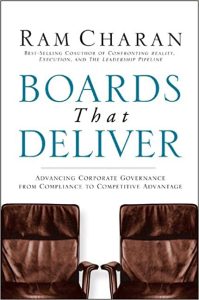
Boards That Deliver
₦20,000.00Finally, a book that brings the vision of truly good governance down to earth. Ram Charan, expert in corporate governance and best-selling author, packs this book with useful tools and techniques to take boards and their companies to a higher level of performance. Charan puts his finger on a growing problem for boards: the disconnect between directors’ efforts and their results. The added time and attention boards invest is not translating into better governanceâ??that is, governance that adds value to the business.
Boards That Deliver gets beyond the rhetoric of corporate governance reform. It captures the tried-and-true practices used by high-performance boards. In contrast to experts who base prescriptions on number-crunching exercises, Charan identifies the real problems that drain directors’ time and suppress their best judgmentsâ??and explains clearly and succinctly how boards can solve those problems. These battle-tested solutions help boards achieve what rules and regulations alone cannotâ??to get succession right, refine a winning strategy, and design a rational CEO compensation package.
Good governance requires leadership. Boards That Deliver is the no-nonsense guide for directors and CEOs who are rising to the leadership challenge to make their boards a competitive advantage.
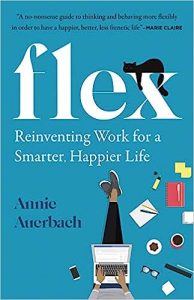
Flex
₦20,000.00The recent coronavirus outbreak has proven what Annie Auerbach has long championed: working 9-5 in an office doesn’t work for most us.
It’s time to change the rules.
We can be efficient and productive when we’re allowed the freedom of flexibility—to meet deadlines working during the hours and in the places we choose. But before the coronavirus pandemic, only 47 percent of American workers had access to flexible working options. Annie Auerbach advises major corporations, including Nike, Google, Unilever, and Pepsico. She understands work culture and the needs of employees. The world is changing for working women, but until the recent pandemic, companies turned a blind eye. Now, it’s time to make this change routine.
Auerbach reiterates the importance of leaving the office cubicle behind and explores the realities many women experience working from home and the changes to their daily lives, including the trickle-down effects, from emotional labor to balancing childcare and education with work, to even biohacking the female body’s unique rhythms.
What happens when women embrace the concept of flex? We become more creative, more strategic with our time and energy, and more engaged with our personal lives. As Auerbach makes clear, we reject “our toxic culture of presenteeism, time-pressure, and ultimately burnout. It helps us escape the army of octopus lady jugglers, crazed with the exhaustion of “having it all.” It allows us to live longer lives more sustainably. It gives us self-worth.”

The Ride Of A Lifetime
₦20,000.00Robert Iger became CEO of The Walt Disney Company in 2005, during a difficult time. Competition was more intense than ever and technology was changing faster than at any time in the company’s history. His vision came down to three clear ideas: Recommit to the concept that quality matters, embrace technology instead of fighting it, and think bigger—think global—and turn Disney into a stronger brand in international markets.
Today, Disney is the largest, most admired media company in the world, counting Pixar, Marvel, Lucasfilm, and 21st Century Fox among its properties. Under Iger’s leadership, Disney’s value grew nearly five times what it was, making Iger one of the most innovating and successful CEOs of our era.
In The Ride of a Lifetime, Robert Iger shares the lessons he learned while running Disney and leading its 220,000-plus employees, and he explores the principles that are necessary for true leadership