Business & Economics

Model Thinker

₦9,000.00

From the stock market to genomics laboratories, census figures to marketing email blasts, we are awash with data. But as anyone who has ever opened up a spreadsheet packed with seemingly infinite lines of data knows, numbers aren’t enough: we need to know how to make those numbers talk.

In The Model Thinker, social scientist Scott E. Page shows us the mathematical, statistical, and computational models—from linear regression to random walks and far beyond—that can turn anyone into a genius. At the core of the book is Page’s “many-model paradigm,” which shows the reader how to apply multiple models to organize the data, leading to wiser choices, more accurate predictions, and more robust designs.
The Model Thinker provides a toolkit for business people, students, scientists, pollsters, and bloggers to make them better, clearer thinkers, able to leverage data and information to their advantage.

Grit

₦15,000.00

The daughter of a scientist who frequently noted her lack of “genius,” Angela Duckworth is now a celebrated researcher and professor. It was her early eye-opening stints in teaching, business consulting, and neuroscience that led to her hypothesis about what really drives success: not genius, but a unique combination of passion and long-term perseverance.

In Grit, she takes us into the field to visit cadets struggling through their first days at West Point, teachers working in some of the toughest schools, and young finalists in the National Spelling Bee. She also mines fascinating insights from history and shows what can be gleaned from modern experiments in peak performance. Finally, she shares what she’s learned from interviewing dozens of high achievers—from JP Morgan CEO Jamie Dimon to New Yorker cartoon editor Bob Mankoff to Seattle Seahawks Coach Pete Carroll.

The Lean Startup

₦23,000.00

Most startups fail. But many of those failures are preventable. The Lean Startup is a new approach being adopted across the globe, changing the way companies are built and new products are launched.

Eric Ries defines a startup as an organization dedicated to creating something new under conditions of extreme uncertainty. This is just as true for one person in a garage or a group of seasoned professionals in a Fortune 500 boardroom. What they have in common is a mission to penetrate that fog of uncertainty to discover a successful path to a sustainable business.

The Lean Startup approach fosters companies that are both more capital efficient and that leverage human creativity more effectively. Inspired by lessons from lean manufacturing, it relies on “validated learning,” rapid scientific experimentation, as well as a number of counter-intuitive practices that shorten product development cycles, measure actual progress without resorting to vanity metrics, and learn what customers really want. It enables a company to shift directions with agility, altering plans inch by inch, minute by minute.

Rather than wasting time creating elaborate business plans, The Lean Startup offers entrepreneurs—in companies of all sizes—a way to test their vision continuously, to adapt and adjust before it’s too late. Ries provides a scientific approach to creating and managing successful startups in a age when companies need to innovate more than ever.

What It Takes

₦25,000.00

People know who Stephen Schwarzman is—at least they think they do. He’s the man who took $400,000 and co-founded Blackstone, the investment firm that manages over $500 billion (as of January 2019). He’s the CEO whose views are sought by heads of state. He’s the billionaire philanthropist who founded Schwarzman Scholars, this century’s version of the Rhodes Scholarship, in China. But behind these achievements is a man who has spent his life learning and reflecting on what it takes to achieve excellence, make an impact, and live a life of consequence.

Folding handkerchiefs in his father’s linen shop, Schwarzman dreamed of a larger life, filled with purpose and adventure. His grades and athleticism got him into Yale. After starting his career in finance with a short stint at a financial firm called DLJ, Schwarzman began working at Lehman Brothers where he ascended to run the mergers and acquisitions practice. He eventually partnered with his mentor and friend Pete Peterson to found Blackstone, vowing to create a new and different kind of financial institution.

Building Blackstone into the leading global financial institution it is today didn’t come easy. Schwarzman focused intensely on culture, hiring great talent, and establishing processes that allow the firm to systematically analyze and evaluate risk. Schwarzman’s simple mantra “don’t lose money” has helped Blackstone become a leading private equity and real estate investor, and manager of alternative assets for institutional investors globally. Both he and the firm are known for the rigor of their investment process, their innovative approach to deal making, the diversification of their business lines, and a conviction to be the best at everything they do.

Schwarzman is also an active philanthropist, having given away more than a billion dollars. In philanthropy, as in business, he is drawn to situations where his capital and energy can be applied to drive transformative solutions and change paradigms, notably in education. He uses the skills learned over a lifetime in finance to design, establish, and support impactful and innovative organizations and initiatives. His gifts have ranged from creating a new College of Computing at MIT for the study of artificial intelligence, to establishing a first-of-its-kind student and performing arts center at Yale, to enabling the renovation of the iconic New York Public Library, to founding the Schwarzman Scholars fellowship program at Tsinghua University in Beijing—the single largest philanthropic effort in China’s history from international donors.

Schwarzman’s story is an empowering, entertaining, and informative guide for anyone striving for greater personal impact. From deal making to investing, leadership to entrepreneurship, philanthropy to diplomacy, Schwarzman has lessons for how to think about ambition and scale, risk and opportunities, and how to achieve success through the relentless pursuit of excellence. Schwarzman not only offers readers a thoughtful reflection on all his own experiences, but in doing so provides a practical blueprint for success.

How Not To Manage People

₦6,000.00

You play it cool, letting your team take half days on Friday and overlooking the occasional latecomer to the office. You stand up for your people and make sure they know you’re there for them, but they still hate working for you. What gives? Well, you’re clearly screwing something up, and it’s time you find out what it is.

It’s frustrating. You’ve put in the work and finally made it to the management team, and you haven’t stopped there. You show up first and leave last. You’re there every time one of your employees needs something. To any outsider looking in, you’re killing this management thing.

But still, your employees want nothing to do with you. They scoff when you tell them what to do and suddenly get quiet when you walk into the room. You know you have to get your team behind you if you’re going to stay on the management team. Chances are it’s not about what you’re doing right–it’s about what you’re doing wrong.

How Not to Manage is filled with interviews and stories of people who were being held back by the things they didn’t realize were working against them. The workplace is a minefield filled with politics and unspoken rules. This book is here to teach you:

-How you’re screwing it up and what to do about it
-How other people screwed it up before figuring it out
-What you should stop doing immediately
-What you should be doing more of

Now, stop panicking and letting frustration hold you back. This book is the tool you need to get your team on your side and rock the manager title!

The Capital One Story

₦7,000.00

What can you learn from the most successful companies in the world? The Capital One Story will help you understand and adopt the competitive strategies, workplace culture, and daily business practices that enabled an unlikely credit card startup to revolutionize the credit industry.

After twenty-five years in the credit card business, Capital One has earned its place in wallets across the world. When the company’s two young founders set out to individualize credit, the financial world thought they were crazy… until it was clear that they weren’t.

Working in the banking industry, Richard Fairbank and Nigel Morris saw that the one-size-fits all standard that the credit card companies employed was leaving big money on the table. They cracked the code and figured out how to customize the credit card experience by offering personalized designs, credit limits, and rewards, revolutionizing the way the credit card industry operated.

Known for their ubiquitous advertising campaigns with A-list talent such as Jennifer Garner and Samuel L. Jackson, the youngest bank in the business wasonce turned down by every one of their competitors buthas since grown to dominate the industry.

Through the story of Capital One, you’ll learn:

-How to recognize underserved sections of a market.
-How rejection by every company in the business doesn’t mean it’s time to quit.
-How to determine what people want and how to get it to them.
-And how to employ marketing campaigns that will change the way people live.

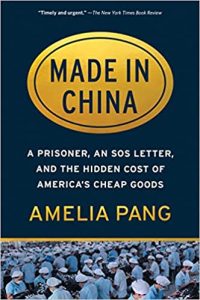
Made In China

₦6,000.00

Discover the truth behind the discounts.

In 2012, an Oregon mother named Julie Keith opened up a package of Halloween decorations. The cheap foam headstones had been five dollars at Kmart, too good a deal to pass up. But when she opened the box, something shocking fell out: an SOS letter, handwritten in broken English.
“Sir: If you occassionally buy this product, please kindly resend this letter to the World Human Right Organization. Thousands people here who are under the persicuton of the Chinese Communist Party Government will thank and remember you forever.”
The note’s author, Sun Yi, was a mild-mannered Chinese engineer turned political prisoner, forced into grueling labor as punishment for campaigning for the freedom to join a forbidden meditation movement. He was imprisoned alongside petty criminals, civil rights activists, and tens of thousands of others the Chinese government had decided to “reeducate,” carving foam gravestones and stitching clothing for more than fifteen hours a day.

In Made in China, investigative journalist Amelia Pang pulls back the curtain on Sun’s story and the stories of others like him, including the persecuted Uyghur minority group, whose abuse and exploitation is rapidly gathering steam. What she reveals is a closely guarded network of laogai—forced labor camps—that power the rapid pace of American consumerism. Through extensive interviews and firsthand reportage, Pang shows us the true cost of America’s cheap goods and shares what is ultimately a call to action—urging us to ask more questions and demand more answers from the companies we patronize.

The Prosperity Paradox

₦12,000.00

Global poverty is one of the world’s most vexing problems. For decades, we’ve assumed smart, well-intentioned people will eventually be able to change the economic trajectory of poor countries. From education to healthcare, infrastructure to eradicating corruption, too many solutions rely on trial and error. Essentially, the plan is often to identify areas that need help, flood them with resources, and hope to see change over time.

But hope is not an effective strategy.

Clayton M. Christensen and his co-authors reveal a paradox at the heart of our approach to solving poverty. While noble, our current solutions are not producing consistent results, and in some cases, have exacerbated the problem. At least twenty countries that have received billions of dollars’ worth of aid are poorer now.

Applying the rigorous and theory-driven analysis he is known for, Christensen suggests a better way. The right kind of innovation not only builds companies—but also builds countries. The Prosperity Paradox identifies the limits of common economic development models, which tend to be top-down efforts, and offers a new framework for economic growth based on entrepreneurship and market-creating innovation. Christensen, Ojomo, and Dillon use successful examples from America’s own economic development, including Ford, Eastman Kodak, and Singer Sewing Machines, and shows how similar models have worked in other regions such as Japan, South Korea, Nigeria, Rwanda, India, Argentina, and Mexico.

The ideas in this book will help companies desperate for real, long-term growth see actual, sustainable progress where they’ve failed before. But The Prosperity Paradox is more than a business book; it is a call to action for anyone who wants a fresh take for making the world a better and more prosperous place.

101 Mission Statements From Top Companies

₦3,000.00

en & Jerry’s has one. So do Tiffany’s and Smucker’s and Microsoft. It doesn’t matter whether you’re a small start-up or one of the biggest players in corporate America. A clear statement of intent not only inspires a sense of overall purpose for a business or nonprofit, it serves as a practical focus for individuals within the organization. It can even provide an actual blueprint for a company’s future and, ultimately, its success.

Selected from among America’s most successful corporations and recognizable brands, these statements vary widely in style, length, and language. However, they all share a universal vision of excellence that includes superiority in their fields, respect for and responsibility toward employees and clients, dedication to stated business goals, and community-oriented values.

Additionally, 101 MISSION STATEMENTS instructs the new or future entrepreneur in crafting and customizing a mission statement that will inspire, motivate, and meet the specific needs and aspirations of the organization and its members.

Scrum

₦6,000.00

For those who believe that there must be a more agile and efficient way for people to get things done, here is a brilliantly discursive, thought-provoking book about the leadership and management process that is changing the way we live.

In the future, historians may look back on human progress and draw a sharp line designating “before Scrum” and “after Scrum.” Scrum is that ground-breaking. It already drives most of the world’s top technology companies. And now it’s starting to spread to every domain where leaders wrestle with complex projects.

If you’ve ever been startled by how fast the world is changing, Scrum is one of the reasons why. Productivity gains of as much as 1200% have been recorded, and there’s no more lucid – or compelling – explainer of Scrum and its bright promise than Jeff Sutherland, the man who put together the first Scrum team more than twenty years ago.

The thorny problem Jeff began tackling back then boils down to this: people are spectacularly bad at doing things with agility and efficiency. Best laid plans go up in smoke. Teams often work at cross purposes to each other. And when the pressure rises, unhappiness soars. Drawing on his experience as a West Point-educated fighter pilot, biometrics expert, early innovator of ATM technology, and V.P. of engineering or CTO at eleven different technology companies, Jeff began challenging those dysfunctional realities, looking for solutions that would have global impact.

In this book you’ll journey to Scrum’s front lines where Jeff’s system of deep accountability, team interaction, and constant iterative improvement is, among other feats, bringing the FBI into the 21st century, perfecting the design of an affordable 140 mile per hour/100 mile per gallon car, helping NPR report fast-moving action in the Middle East, changing the way pharmacists interact with patients, reducing poverty in the Third World, and even helping people plan their weddings and accomplish weekend chores.

Woven with insights from martial arts, judicial decision making, advanced aerial combat, robotics, and many other disciplines, Scrum is consistently riveting. But the most important reason to read this book is that it may just help you achieve what others consider unachievable – whether it be inventing a trailblazing technology, devising a new system of education, pioneering a way to feed the hungry, or, closer to home, a building a foundation for your family to thrive and prosper.

Start-Up Nation

₦4,000.00

Start-Up Nation addresses the trillion dollar question: How is it that Israel — a country of 7.1 million, only 60 years old, surrounded by enemies, in a constant state of war since its founding, with no natural resources– produces more start-up companies than large, peaceful, and stable nations like Japan, China, India, Korea, Canada and the UK?

With the savvy of foreign policy insiders, Senor and Singer examine the lessons of the country’s adversity-driven culture, which flattens hierarchy and elevates informality– all backed up by government policies focused on innovation. In a world where economies as diverse as Ireland, Singapore and Dubai have tried to re-create the “Israel effect”, there are entrepreneurial lessons well worth noting. As America reboots its own economy and can-do spirit, there’s never been a better time to look at this remarkable and resilient nation for some impressive, surprising clues.

Art Of Innovation

₦5,000.00

There isn’t a business that doesn’t want to be more creative in its thinking, products and processes. In The Art of Innovation, Tom Kelley, partner at the Silicon Valley-based firm IDEO, developer of hundreds of innovative products from the first commercial mouse to virtual reality headsets and the Palm hand-held, takes readers behind the scenes of this wildly imaginative company to reveal the strategies and secrets it uses to turn out hit after hit.

Kelley shows how teams:
-Research and immerse themselves in every possible aspect of a new product or service
-Examine each product from the perspective of clients, consumers and other critical audiences
-Brainstorm best when they are focussed, being physical and having fun

The Art of Innovation will provide business leaders with the insights and tools they need to make their companies the leading-edge top-rated stars of their industries.

Women & Leadership

₦15,000.00

s a result of their broad experience on the world stage in politics, economics and global not-for-profits, Ngozi Okonjo-Iweala and Julia Gillard have some strong ideas about the impact of gender on the treatment of leaders.

Women and Leadership takes a consistent and comprehensive approach to teasing out what is different for women who lead. Almost every year new findings are published about the way people see women leaders compared with their male counterparts. The authors have taken that academic work and tested it in the real world. The same set of interview questions were put to each leader in frank face-to-face interviews. Their responses were then used to examine each woman’s journey in leadership and whether their lived experiences were in line with or different from what the research would predict.

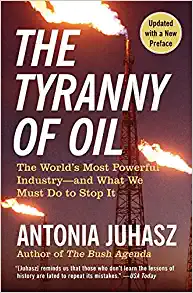
The Tyranny Of Oil

₦5,500.00

In the tradition of the Academy Award-winning documentary An Inconvenient Truth, Antonia Juhasz’s The Tyranny of Oil offers a chilling exposé of the modern American oil industry and its dire abuse of power. A leading international trade and finance policy expert and the author of The Bush Agenda, Juhasz presents eye-opening truths about a potentially catastrophic global energy crisis that only promises to get much worse in the coming years—and provides possible solutions for meaningful change.

The Making Of A Manager

₦18,000.00

Congratulations, you’re a manager! After you pop the champagne, accept the shiny new title, and step into this thrilling next chapter of your career, the truth descends like a fog: you don’t really know what you’re doing.

That’s exactly how Julie Zhuo felt when she became a rookie manager at the age of 25. She stared at a long list of logistics–from hiring to firing, from meeting to messaging, from planning to pitching–and faced a thousand questions and uncertainties. How was she supposed to spin teamwork into value? How could she be a good steward of her reports’ careers? What was the secret to leading with confidence in new and unexpected situations?

Now, having managed dozens of teams spanning tens to hundreds of people, Julie knows the most important lesson of all: great managers are made, not born. If you care enough to be reading this, then you care enough to be a great manager.

The Making of a Manager is a modern field guide packed everyday examples and transformative insights, including:

* How to tell a great manager from an average manager (illustrations included)
* When you should look past an awkward interview and hire someone anyway
* How to build trust with your reports through not being a boss
* Where to look when you lose faith and lack the answers

Whether you’re new to the job, a veteran leader, or looking to be promoted, this is the handbook you need to be the kind of manager you wish you had.

The Joy Of Work

₦4,500.00

In the course of a career that has taken him from some of the world’s biggest media companies to Twitter, via Google and YouTube, Bruce Daisley has become fascinated by what makes great companies tick. And in his hugely popular podcast Eat Sleep Work Repeat, he has dug right into the DNA of work, talking to leading experts about how we can make our jobs more fulfilling, more productive – and much more enjoyable.

Now, in The Joy of Work, he shares the fruits of his discoveries in 30 succinct tips that range across all aspects of 21st-century office life and that combine inspiration, empirically tested insight and down-to-earth practical answers in equal measure. Are lunch breaks for wimps, or do they actually make us more productive? Is it true that you can improve team performance simply by moving the location of the kettle or coffee machine? Why are meetings so often a waste of time, and how can they be fixed? And what are Monk Mode Mornings and Hack Weeks, and why do people swear by them?

If you’re not happy with the status quo, if you want to find out how things could be done better, if you’re seeking greater fulfilment at work and a life that is less fraught, The Joy of Work will point the way.

1 … 27 28 29 … 40