
Business & Economics

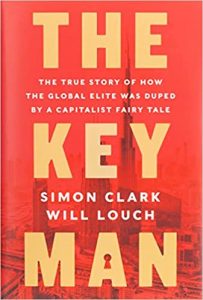
The Key Man

₦9,000.00

In this compelling story of lies, greed and tarnished idealism, two Wall Street Journal reporters investigate a man who Bill Gates, Western governments, and other investors entrusted with billions of dollars to make profits and end poverty, but who now stands accused of masterminding one of the biggest, most brazen financial frauds ever.

Arif Naqvi was charismatic, inspiring, and self-made—all the qualities of a successful business leader. The founder of Abraaj, a Dubai-based private-equity firm, Naqvi was the Key Man to the global elite searching for impact investments to make money and do good. He persuaded politicians he could help stabilize the Middle East after 9/11 by providing jobs and guided executives to opportunities in cities they struggled to find on the map. Bill Gates helped him start a $1 billion fund to improve healthcare in poor countries and the UN and Interpol appointed him to boards. As Pope Francis blessed a move to harness capitalism for the good of the poor, Naqvi won the support of Obama’s administration and investors, who compared him to Tom Cruise in Mission: Impossible.

In 2018, Simon Clark and Will Louch were contacted by an anonymous whistleblower who said Naqvi had swindled investors out of hundreds of millions of dollars and offered bribes to sustain his billionaire lifestyle. Digging into the claims, Clark and Louch uncovered hundreds of documents and exposed the wrongdoing. In April 2019—months after their exposé broke—Naqvi was arrested on charges of fraud and racketeering, and faces up to 291 years in jail.

Populated by a cast of larger-than-life characters and moving across Asia, Africa, Europe and America, The Key Man is the story of how the global elite was duped by a capitalist fairytale. Clark and Louch shine a light on efforts to clean up global capital flows even as opaque private equity firms amass trillions of dollars and offshore tax havens cast a veil of secrecy which prevents regulators, investors and citizens from understanding what’s really going on in the finance industry.

Money In One Lesson

₦9,000.00

Understanding cash, currencies and the financial system is vital for making sense of what is going on in our world, especially now. Since the 2008 financial crisis, money has rarely been out of the headlines. Central banks have launched extraordinary policies, like quantitative easing or negative interest rates. New means of payment, like Bitcoin and Apple Pay, are changing how we interact with money and how governments and corporations keep track of our spending. Radical politicians in the US and UK are urging us to transform our financial system and make it the servant of social justice.

And yet, if you stopped for a moment and asked yourself whether you really understand how it works, would you honestly be able to say ‘yes’?

In Money in One Lesson, Gavin Jackson, a lead writer for the Financial Times, specialising in economics, business and public policy, answers the most important questions to clarify for the reader what money is and how it shapes our societies. With brilliant storytelling, Jackson provides a basic understanding of the most important element of our everyday lives. Drawing on stories like the 1970s Irish Banking Strike to show what money actually is, and the Great Inflation of West Africa’s cowrie shell money to explain how it keeps its value, Money in One Lesson demystifies the world of finance and explains how societies, both past and present, are forever entwined with monetary matters.

Blue Ocean Strategy

₦9,000.00

In this perennial bestseller, embraced by organizations and industries worldwide, globally preeminent management thinkers W. Chan Kim and Renee Mauborgne challenge everything you thought you knew about the requirements for strategic success. Recognized as one of the most iconic and impactful strategy books ever written, BLUE OCEAN STRATEGY, now updated with fresh content from the authors, argues that cutthroat competition results in nothing but a bloody red ocean of rivals fighting over a shrinking profit pool. Based on a study of 150 strategic moves (spanning more than 100 years across 30 industries), the authors argue that lasting success comes not from battling competitors but from creating “blue oceans”–untapped new market spaces ripe for growth.

Grinding It Out: The Making of McDonald’s

₦9,000.00

Few entrepreneurs can claim to have radically changed the way we live, and Ray Kroc is one of them. His revolutions in food-service automation, franchising, shared national training, and advertising have earned him a place beside the men and women who have founded not only businesses, but entire empires. But even more interesting than Ray Kroc the business man is Ray Kroc the man. Not your typical self-made tycoon, Kroc was fifty-two years old when he opened his first franchise. In Grinding It Out, you’ll meet the man behind McDonald’s, one of the largest fast-food corporations in the world with over 32,000 stores around the globe.

Irrepressible enthusiast, intuitive people person, and born storyteller, Kroc will fascinate and inspire you on every page.

Moneyland

₦8,500.00

From ruined towns on the edge of Siberia, to Bond-villain lairs in London and Manhattan, something has gone wrong. Kleptocracies, governments run by corrupt leaders that prosper at the expense of their people, are on the rise.

Once upon a time, if an official stole money, there wasn’t much he could do with it. He could buy himself a new car or build himself a nice house or give it to his friends and family, but that was about it. If he kept stealing, the money would just pile up in his house until he had no rooms left to put it in, or it was eaten by mice.

And then some bankers had a bright idea.

Join the investigative journalist Oliver Bullough on a journey into Moneyland―the secret country of the lawless, stateless superrich.

Learn how the institutions of Europe and the United States have become money-laundering operations, attacking the foundations of many of the world’s most stable countries. Meet the kleptocrats. Meet their awful children. And find out how heroic activists around the world are fighting back.

This is the story of wealth and power in the 21st century. It isn’t too late to change it.

The Deadline Effect

₦8,500.00

Perfectionists and procrastinators alike agree—it’s natural to dread a deadline. Whether you are completing a masterpiece or just checking off an overwhelming to-do list, the ticking clock signals despair. Christopher Cox knows the panic of the looming deadline all too well—as a magazine editor, he has spent years overseeing writers and journalists who couldn’t meet a deadline to save their lives. After putting in a few too many late nights in the newsroom, he became determined to learn the secret of managing deadlines. He set off to observe nine different organizations as they approached a high-pressure deadline. Along the way, Cox made an even greater discovery: these experts didn’t just meet their big deadlines—they became more focused, productive, and creative in the process.

An entertaining blend of “behavioral science, psychological theory, and academic studies with compelling storytelling and descriptive case studies” (Financial Times), The Deadline Effect reveals the time-management strategies these teams used to guarantee success while staying on schedule: a restaurant opening for the first time, a ski resort covering an entire mountain in snow, a farm growing enough lilies in time for Easter, and more. Cox explains how to use deadlines to our advantage, the dynamics of teams and customers, and techniques for using deadlines to make better, more effective decisions.

Working For You Isn’t Working For Me

₦8,500.00

The guide for anyone who deals with difficult authority figures at work.

Sooner or later, we all have to work for someone we can’t stand-whether it’s an inept supervisor, an undermining department head, or an overly demanding client. When that happens, some people quit, some suffer in silence, and others cope by sulking, obsessing, or retaliating.

But you can take charge of this crucial workplace relationship. In this book, Katherine Crowley and Kathi Elster, authors of the bestseller Working for You Is Killing Me, offer concrete examples of bad boss scenarios and a proven four-step program for improving each situation:

Leadership Is Language

₦8,500.00

ou might imagine that an effective leader is someone who makes quick, intelligent decisions, gives inspiring speeches, and issues clear orders to their team so they can execute a plan to achieve your organization’s goals. Unfortunately, David Marquet argues, that’s an outdated model of leadership that just doesn’t work anymore.

As a leader in today’s networked, information-dense business climate, you don’t have full visibility into your organization or the ground reality of your operating environment. In order to harness the eyes, ears, and minds of your people, you need to foster a climate of collaborative experimentation that encourages people to speak up when they notice problems and work together to identify and test solutions.

Too many leaders fall in love with the sound of their own voice, and wind up dictating plans and digging in their heels when problems begin to emerge. Even when you want to be a more collaborative leader, you can undermine your own efforts by defaulting to command-and-control language we’ve inherited from the industrial era.

It’s time to ditch the industrial age playbook of leadership. In Leadership is Language, you’ll learn how choosing your words can dramatically improve decision-making and execution on your team. Marquet outlines six plays for all leaders, anchored in how you use language.

Powershift

₦8,500.00

The bestselling author and star of ABC’s Shark Tank reveals how to master the three prongs of influence: reputation, negotiation, and relationships.

Have you ever wanted to make a big change in your life but weren’t sure where to start? In Powershift, Daymond John shares the answer. To take control of your destiny and drive the change you want to see, you need to lay the groundwork so you’re prepared to seize every opportunity that comes your way. And that means mastering

• Influence—make an impression: Develop a reputation that highlights what you stand for.
• Negotiation—make a deal: Hone a win-win negotiating style.
• Relationships—make a connection last: Nurture those connections you make along the way.

Through never-before-told stories from his life and career, Daymond shares the lessons that got him to where he is today: from how he remade his public image as he transitioned from clothing mogul to television personality, to how he mastered the negotiation strategies that determine whether deals are won or lost “in the tank,” to his secrets for building long-lasting—and profitable—relationships with founders and brands.

Throughout the book, some of the world’s most successful personalities reveal how they shifted their power in meaningful ways.

Upstream

₦8,500.00

So often in life, we get stuck in a cycle of response. We put out fires. We deal with emergencies. We stay downstream, handling one problem after another, but we never make our way upstream to fix the systems that caused the problems. Cops chase robbers, doctors treat patients with chronic illnesses, and call-center reps address customer complaints. But many crimes, chronic illnesses, and customer complaints are preventable. So why do our efforts skew so heavily toward reaction rather than prevention?

Upstream probes the psychological forces that push us downstream—including “problem blindness,” which can leave us oblivious to serious problems in our midst. And Heath introduces us to the thinkers who have overcome these obstacles and scored massive victories by switching to an upstream mindset. One online travel website prevented twenty million customer service calls every year by making some simple tweaks to its booking system. A major urban school district cut its dropout rate in half after it figured out that it could predict which students would drop out—as early as the ninth grade. A European nation almost eliminated teenage alcohol and drug abuse by deliberately changing the nation’s culture. And one EMS system accelerated the emergency-response time of its ambulances by using data to predict where 911 calls would emerge—and forward-deploying its ambulances to stand by in those areas.

Upstream delivers practical solutions for preventing problems rather than reacting to them. How many problems in our lives and in society are we tolerating simply because we’ve forgotten that we can fix them?

Money For Nothing

₦8,500.00

In the heart of the Scientific Revolution, when new theories promised to explain the affairs of the universe, Britain was broke, facing a mountain of debt accumulated in war after war it could not afford. But that same Scientific Revolution—the kind of thinking that helped Isaac Newton solve the mysteries of the cosmos—would soon lead clever, if not always scrupulous, men to try to figure a way out of Britain’s financial troubles.

Enter the upstart leaders of the South Sea Company. In 1719, they laid out a grand plan to swap citizens’ shares of the nation’s debt for company stock, removing the burden from the state and making South Sea’s directors a fortune in the process. Everybody would win. The king’s ministers took the bait—and everybody did win. Far too much, far too fast. The following crash came suddenly in a rush of scandal, jail, suicide, and ruin. But thanks to Britain’s leader, Robert Walpole, the kingdom found its way through to emerge with the first truly modern, reliable, and stable financial exchange.

Thomas Levenson’s Money for Nothing tells the unbelievable story of the South Sea Bubble with all the exuberance, folly, and the catastrophe of an event whose impact can still be felt today.

Retail’s Seismic Shift

₦8,500.00

For one hundred years, retail was designed for the car―buildings and malls to travel to. Now it is designed for the mobile smart device―for consumers to travel with. In a world with an overabundance of material goods, consumer values and the drivers of retail success are being radically redefined. The smartphone has created a world of limitless expectation and logistical possibility: What will the retail experience look like in ten, twenty, or even fifty years―and how should all companies be preparing?

Industry experts Michael Dart and Robin Lewis identify the major trends in our economy that will shape the future of retail and determine who wins. Imagine aworld where entertainment, experience, or values matter more than the product. We are approaching the time in which distribution begins and ends with the consumer, mass markets give way to fragmented markets, and the necessity of entirely new business models is paramount. Amazon, Uber, and AirBnB are just the beginning; new technologies will continue to grow and uproot existing business models. And now, with the emergence of the technology-empowered young consumer culture, retailers will be forced to transform their offerings.

Criminal Contagion

₦8,500.00

COVID-19 is reshaping and challenging governments, social order and the world economy in previously unimaginable ways–including changes to the illegal flow of goods and services. Livelihoods are shrinking or disappearing altogether, and mafias, gangsters and profiteers are adapting to find
new routes for illegal commodities, from counterfeit drugs to trafficked wildlife and people.

Shortages, lockdowns and citizen responses have brought the underworld and upperworld into greater convergence, as criminals strive to meet needs, maximize opportunities and fill governance vacuums. Unscrupulous fraudsters are touting fake remedies to desperate people: counterfeit drugs and illicit
wildlife used in traditional medicine. Social distancing and lockdowns have seen online financial transactions and cyber-communication and -operations replacing or supplementing physical shipments and interactions, again affording new opportunities for fraudsters and cyber-criminals. Heavy-handed
state responses have also, quite literally, created new illicit markets by prohibiting the sale of particular goods and services, while some elites have capitalized on the pandemic for personal or political gain.

The pandemic has cast a long shadow over the rule of law. Criminal Contagion uncovers its impacts on the global illicit economy, and unpacks the long-term implications of these extraordinary developments.

Becoming A Person Of Influence

₦8,500.00

America’s leadership expert teaches that if your life in any way connects with other people, you are an influencer. Whatever your vocation or aspiration is, you can increase your impact with Maxwell’s simple, insightful ways to interact more positively with others. Watch your personal and organizational success go off the charts!

The Spotify Play: How CEO and Founder Daniel Ek Beat Apple, Google and Amazon in the Race for Audio Dominance

₦8,500.00

Steve Jobs tried to stop this moment from ever happening. Google and Microsoft made bids to preempt it. The music industry blocked it time and again. Yet, on a summer’s eve in 2011, the whiz kid CEO of a Swedish start-up celebrated his company’s US launch.

In the midst of the Apple-Android tech war and a music label crusade against piracy and illegal downloading, Spotify redrew the battle lines, sent shockwaves through Silicon Valley, and got the hardline executives at Universal, Sony, and Warner to sign with its “free-mium” platform.

In The Spotify Play, now adapted into an upcoming Netflix Original series, Swedish investigative tech journalists Sven Carlsson and Jonas Leijonhufvud, who covered the company from its inception, draw upon hundreds of interviews, previously untapped sources, and in-depth reporting on figures like Mark Zuckerberg, Sean Parker, Steve Jobs, Taylor Swift, Jay-Z, Pony Ma Huateng, and Jimmy Iovine. They have captured the riveting David vs. Goliath story of a disruptive innovator who played the industry giants in a quest to revolutionize the consumption of sound, building today’s largest online source of audio, with more than 50 million songs, one million-plus podcasts, and over 300 million users.

1 … 20 21 22 … 40