Business & Economics

Black Founder

₦13,000.00

Stacy Spikes knows what’s it like to be an outsider. He certainly knew he didn’t fit the mold of a successful future tech entrepreneur. But he marshaled his resilience and ultimately set out to shatter that mold—along with the glass ceiling that came with it. Finding his footing in the tech world was an education in the complexities of being an outsider—but as Stacy came to see, rather than a hindrance, it afforded him a unique position of power.

Beginning as a film studio gopher, Spikes quickly rose through the industry ranks, being named one of the Hollywood Reporter’s 30 Under 30. Still, he was an outsider looking in. So he set out to make his own dreams a reality. Defying expectations, Spikes effectively disrupted the status quo and reinvented himself from junior executive to CEO Tech Founder. What ensued was an escalating adventure with bigger stages, bigger risks, and a roller-coaster ride of exhilarating ascent—unpredictable collapse—and a story book return.

Now Spikes shares his challenges, pitfalls, and keys to personal and professional fulfillment. He shows how the seemingly impossible can be overcome by having faith in oneself and creating from a place of confidence. Taking readers inside the battles of the boardroom and beyond, Black Founder is a business memoir that will inspire every outsider who has a dream.

Open Strategy

₦13,000.00

How smart companies are opening up strategic initiatives to involve front-line employees, experts, suppliers, customers, entrepreneurs, and even competitors.

Why are some of the world’s most successful companies able to stay ahead of disruption, adopting and implementing innovative strategies, while others struggle? It’s not because they hire a new CEO or expensive consultants but rather because these pioneering companies have adopted a new way of strategizing. Instead of keeping strategic deliberations within the C-Suite, they open up strategic initiatives to a diverse group of stakeholders—front-line employees, experts, suppliers, customers, entrepreneurs, and even competitors. Open Strategy presents a new philosophy, key tools, step-by-step advice, and fascinating case studies—from companies that range from Barclays to Adidas—to guide business leaders in this groundbreaking approach to strategy.

The authors—business-strategy experts from both academia and management consulting—introduce tools for each of the three stages of strategy-making: idea generation, plan formulation, and implementation. These are digital tools (including strategy contests), which allow the widest participation; hybrid digital/in-person tools (including a “nightmare competitor challenge”); a workshop tool that gamifies the business model development process; and tools that help companies implement and sustain open strategy efforts.

Open strategy has an astonishing track record: a survey of 200 business leaders shows that although open-strategy techniques were deployed for only 30 percent of their initiatives, those same initiatives generated 50 percent of their revenues and profits. This book offers a roadmap for this kind of success.

Myths Of Branding

₦13,000.00

Myths of Branding, written by renowned branding experts Andy Milligan and Simon Bailey, explores the huge number of misguided, mistaken and blatantly false myths that abound in the branding arena. From the belief that developing brands is nothing more than fiddling with logos, to the perception that it’s a ‘soft’ area of marketing that doesn’t go beyond visual identity and that the customer is always right – these myths are all surprisingly entrenched, yet could not be further from the truth.

Myths of Branding uses up-to-date case studies and witty examples to debunk these popular misconceptions, and replaces them with the reality of what it’s really like to work in the world of branding. Jam-packed with entertaining anecdotes and useful information that practitioners can learn from, it guarantees a deeper, sharper understanding of the realities of branding and brand management.

Build For Tomorrow

₦13,000.00

We experience change in four phases. The first is panic. Then we adapt. Then we find a new normal. And then, finally, we reach the phase we could not have imagined in the beginning, the moment when we realize that we wouldn’t go back.

Build for Tomorrow is designed to accelerate that process—to help you lessen your panic, adapt faster, define the new normal, and thrive going forward. And it arrives as we all, in some way, have felt a shift in our lives. The pandemic forced a moment of collective change, and we are still being forced to make new plans and adjustments to our lives, families, and careers. Many of us will never go back, continuing to work from home, demanding higher wages, or starting new businesses.

To help people along this journey, Entrepreneur magazine editor in chief Jason Feifer offers stories, lessons, and concrete exercises from the most potent sources of change in our world. He speaks to the world’s most successful changemakers—from global celebrities like Dwayne “The Rock” Johnson and Maria Sharapova to innovative CEOs and Main Street heroes—to learn how they decide what to protect, what to discard, and how to move forward without fear. He also draws lessons from history, looking at how massive changes across time can help us better understand the opportunities of today. For example, he finds guidance for our post-pandemic realities inside the power shifts that occurred after the Bubonic Plague, and he reveals how the history of innovations like the elevator and even the teddy bear can teach anyone to be more forward-thinking.

We cannot anticipate tomorrow’s needs, but it shouldn’t take a crisis to push us forward. This book will show you how to make change on your own terms.

The Cartiers

₦13,000.00

The Cartiers is the revealing tale of a jewelry dynasty—four generations, from revolutionary France to the 1970s. At its heart are the three Cartier brothers whose motto was “Never copy, only create” and who made their family firm internationally famous in the early days of the twentieth century, thanks to their unique and complementary talents: Louis, the visionary designer who created the first men’s wristwatch to help an aviator friend tell the time without taking his hands off the controls of his flying machine; Pierre, the master dealmaker who bought the New York headquarters on Fifth Avenue for a double-stranded natural pearl necklace; and Jacques, the globe-trotting gemstone expert whose travels to India gave Cartier access to the world’s best rubies, emeralds, and sapphires, inspiring the celebrated Tutti Frutti jewelry.

Francesca Cartier Brickell, whose great-grandfather was the youngest of the brothers, has traveled the world researching her family’s history, tracking down those connected with her ancestors and discovering long-lost pieces of the puzzle along the way. Now she reveals never-before-told dramas, romances, intrigues, betrayals, and more.

The Cartiers also offers a behind-the-scenes look at the firm’s most iconic jewelry—the notoriously cursed Hope Diamond, the Romanov emeralds, the classic panther pieces—and the long line of stars from the worlds of fashion, film, and royalty who wore them, from Indian maharajas and Russian grand duchesses to Wallis Simpson, Coco Chanel, and Elizabeth Taylor.

Gold, Oil and Avocados: A Recent History of Latin America in Sixteen Commodities

₦12,500.00

The 21st century began optimistically in Latin America. Left-leaning leaders armed with programs to reduce poverty and reclaim national wealth were seeing results—but as the aughts gave way to the teens, they began to fall like dominos. Where did the dreams of this “pink tide” go? Look no further than the original culprits of Latin American disenfranchisement: resource-rich land and unscrupulous extraction.

Recounting the story commodity by commodity, Andy Robinson reveals what oxen have to do with the rise of Jair Bolsonaro, how quinoa explains the mob that descended on Evo Morales, and why oil is the culprit behind the protracted coup in Venezuela. In addition to the usual suspects like gold and bananas which underscored the original plunder of the Americas, Robinson also shows how a new generation of valuable resources—like coltan for smartphones, lithium for electric cars, and niobium for SpaceX rockets—have become important players in the fate of Latin America. And as the energy transition sets mineral prices soaring, Latin America remains at the mercy of the rollercoaster of commodity prices.

In Gold, Oil, and Avocados, Robinson takes readers from the salt plains of Chile to the depths of the Amazonian jungle to stitch together the story of Latin America’s last decade, showing how the imperial plunder of the past carries on today under a new name.

Principles

₦12,500.00

In 1975, Ray Dalio founded an investment firm, Bridgewater Associates, out of his two-bedroom apartment in New York City. Forty years later, Bridgewater has made more money for its clients than any other hedge fund in history and grown into the fifth most important private company in the United States, according to Fortune magazine. Dalio himself has been named to Time magazine’s list of the 100 most influential people in the world. Along the way, Dalio discovered a set of unique principles that have led to Bridgewater’s exceptionally effective culture, which he describes as “an idea meritocracy that strives to achieve meaningful work and meaningful relationships through radical transparency.” It is these principles, and not anything special about Dalio—who grew up an ordinary kid in a middle-class Long Island neighborhood—that he believes are the reason behind his success.

In Principles, Dalio shares what he’s learned over the course of his remarkable career. He argues that life, management, economics, and investing can all be systemized into rules and understood like machines. The book’s hundreds of practical lessons, which are built around his cornerstones of “radical truth” and “radical transparency,” include Dalio laying out the most effective ways for individuals and organizations to make decisions, approach challenges, and build strong teams. He also describes the innovative tools the firm uses to bring an idea meritocracy to life, such as creating “baseball cards” for all employees that distill their strengths and weaknesses, and employing computerized decision-making systems to make believability-weighted decisions. While the book brims with novel ideas for organizations and institutions, Principles also offers a clear, straightforward approach to decision-making that Dalio believes anyone can apply, no matter what they’re seeking to achieve.

Love is Just Damn Good Business: Do What You Love in the Service of the People Who Love What You Do

₦12,500.00

It’s time to toss aside the touchy-feely notions of love in business and acknowledge the real power that it holds. Love is not only appropriate in the context of business, it’s the foundation of great leadership. To put it bluntly: love is just damn good business. That’s the simple but profound truth that leadership consultant Steve Farber has discovered in his extensive work with Fortune 100 companies and other successful businesses. His game-changing approach to love as a practical business strategy will help you to:

• Identify your passions―and share them with others
• Create a culture of love at work―and spark innovation, productivity, and joy
• Serve your customers, so they love how you treat them―and have them coming back for more
• Invest time in making personal connections―that are mutually rewarding
• Focus on serving the needs of others―they’re going to love it
• Do what you love―and make it your business, so others love it, too

The proven principles you’ll find in this book will help you lay the groundwork for a thriving, competitive enterprise. When love is part of your organization’s framework and operationalized in its culture, employees and customers feel genuinely valued. Employees who are passionate about the work that they do are more loyal, innovative, creative, and inspired, and that translates to great customer experience. They don’t serve others out of obligation, but because of a genuine desire to improve people’s lives. And when customers reciprocate by loving your products, your services, and your people, that’s when something great happens. That’s when you get loyalty. That’s when you get raving fans. It’s a refreshingly human way of doing business.

In addition to Farber’s field-tested strategies, you’ll find inspiring case studies from a wide range of industries and leaders, revealing self-assessment quizzes, and practical pointers on how to build a corporate culture based on love, the ultimate competitive advantage. At the end of the day, it’s just damn good business.

Bitcoin Billionaires

₦12,000.00

Ben Mezrich’s 2009 bestseller The Accidental Billionaires is the definitive account of Facebook’s founding and the basis for the Academy Award–winning film The Social Network. Two of the story’s iconic characters are Harvard students Tyler and Cameron Winklevoss: identical twins, Olympic rowers, and foils to Mark Zuckerberg. Bitcoin Billionaires is the story of the brothers’ redemption and revenge in the wake of their epic legal battle with Facebook.

Planning to start careers as venture capitalists, the brothers quickly discover that no one will take their money after their fight with Zuckerberg. While nursing their wounds in Ibiza, they accidentally run into an eccentric character who tells them about a brand-new idea: cryptocurrency. Immersing themselves in what is then an obscure and sometimes sinister world, they begin to realize “crypto” is, in their own words, “either the next big thing or total bulls–t.” There’s nothing left to do but make a bet.

From the Silk Road to the halls of the Securities and Exchange Commission, Bitcoin Billionaires will take us on a wild and surprising ride while illuminating a tantalizing economic future. On November 26, 2017, the Winklevoss brothers became the first bitcoin billionaires. Here’s the story of how they got there—as only Ben Mezrich could tell it.

When They Win You Win

₦12,000.00

Businesses everywhere are plagued by managers who seem to think that keeping their staff miserable is the best way to deliver profits. This is a failure of leadership that also hurts the bottom line; research has shown that maintaining a happy, engaged workforce consistently drives measurably better business results across the board.

In When They Win, You Win, Russ Laraway, the Chief People Officer of Goodwater Capital, provides a simple, coherent, and complete leadership standard that teaches organizational planners and managers how to develop incredible levels of employee engagement. The book identifies three key elements: clear direction-setting, frequent coaching, and active engagement with employees on their long-term career goals.

Russ Laraway’s approach to management, developed at Google, Twitter, Qualtrics, and Goodwater, shows the way to cultivate a happy, productive, and engaged team. Happy results are sure to follow―for you, your customers, your shareholders, and your employees alike.

The Anxious Investor

₦12,000.00

A revelatory new guide to becoming a smarter investor, drawing upon behavioral psychology, economic modeling, and market history to offer practical advice for reaching your financial goals

Grow Rich With The Power Of Your Subconscious Mind

₦12,000.00

From the renowned bestselling author of The Power of Your Subconscious Mind, an authorized collection of writings that unlock the secret to extraordinary success that lies within each of us

Millions of readers have embraced Joseph Murphy’s writings, including the phenomenal bestseller The Power of Your Subconscious Mind, a beloved classic that sits alongside the works of Napoleon Hill, Dale Carnegie, and Norman Vincent Peale. This new collection, authorized by the Joseph Murphy Trust, focuses on prosperity – and the simple yet powerful ways we can focus our attention and beliefs to achieve life goals, obtain riches, and live the life of our dreams.

Whether you are a longtime reader of Murphy’s insights or are discovering his work for the first time, this powerful and deceptively simple volume will illuminate the path to success. Comprised of original writings including some that have never been published in book form, along with modern-day updates, examples, and insights for the contemporary reader, the book goes beyond what we’ve already heard about the Law of Attraction and the power of positive thinking to reveal the ability that each of us has to manifest remarkable change in our lives.

Choose Possibility

₦12,000.00

An indispensable guide to decision-making and risk-taking for anyone who finds themselves afraid of making a wrong choice in their career. This fresh, new approach comes from one of the most highly regarded and well-respected female tech executives in Silicon Valley, who made many wrong choices in her career, but learned how to turn those down moments into successes.

Life is made up of a series of choices. What do you do if one of those choices turns out poorly, especially if it was carefully considered? How do you trust your instinctive decision-making skills and make the next right choice? How do you continue to take risks when, suddenly, your risks are not working out?

Sukhinder Singh Cassidy is one of the most highly regarded and well-respected female tech executives in Silicon Valley, but she’ll be the first to admit that her path to success has been far from linear. She started three companies that have done exceedingly well, including theBoardlist (an organization designed to promote and place women onto corporate boards), and she just served as president of StubHub, which sold earlier this year for $4 billion.

But she’s also encountered plenty of poor choices, misfires, unexpected headwinds, and all other types of pitfalls that she had to learn how to confront, analyze, navigate, and incorporate into her new path forward. From her own experience, she knows that personal success does not come from making one singular “correct” or “big” decision. Rather, long-range success comes from tackling numerous choices that are aimed to optimize future possibilities.

Singh Cassidy’s “seven myths of success,” as well as her advice on how to make FOMO into your friend, multiply your “bets” in life, and understand why you shouldn’t be blinded by “passion bias,” all provide an entirely new way to approach risk-taking and achieve lasting success.

Working Backwards

₦12,000.00

In Working Backwards, two long-serving Amazon executives reveal the principles and practices that have driven the success of one of the most extraordinary companies the world has ever known. With twenty-seven years of Amazon experience between them―much of it during the period of unmatched innovation that created products and services including Kindle, Amazon Prime, Amazon Studios, and Amazon Web Services―Bryar and Carr offer unprecedented access to the Amazon way as it was developed and proven to be repeatable, scalable, and adaptable.

With keen analysis and practical steps for applying it at your own company―no matter the size―the authors illuminate how Amazon’s fourteen leadership principles inform decision-making at all levels of the company. With a focus on customer obsession, long-term thinking, eagerness to invent, and operational excellence, Amazon’s ground-level practices ensure these characteristics are translated into action and flow through all aspects of the business.

Working Backwards is both a practical guidebook and the story of how the company grew to become so successful. It is filled with the authors’ in-the-room recollections of what “Being Amazonian” is like and how their time at the company affected their personal and professional lives. They demonstrate that success on Amazon’s scale is not achieved by the genius of any single leader, but rather through commitment to and execution of a set of well-defined, rigorously-executed principles and practices―shared here for the very first time.

Whatever your talent, career or organization might be, find out how you can put Working Backwards to work for you.

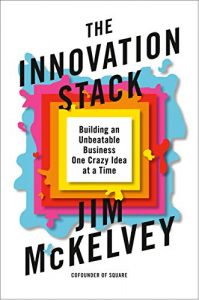
The Innovation Stack

₦12,000.00

In 2009, a St. Louis glassblowing artist and recovering computer scientist named Jim McKelvey lost a sale because he couldn’t accept American Express cards. Frustrated by the high costs and difficulty of accepting credit card payments, McKelvey joined his friend Jack Dorsey (the cofounder of Twitter) to launch Square, a startup that would enable small merchants to accept credit card payments on their mobile phones. With no expertise or experience in the world of payments, they approached the problem of credit cards with a new perspective, questioning the industry’s assumptions, experimenting and innovating their way through early challenges, and achieving widespread adoption from merchants small and large.

But just as Square was taking off, Amazon launched a similar product, marketed it aggressively, and undercut Square on price. For most ordinary startups, this would have spelled the end. Instead, less than a year later, Amazon was in retreat and soon discontinued its service. How did Square beat the most dangerous company on the planet? Was it just luck? These questions motivated McKelvey to study what Square had done differently from all the other companies Amazon had killed. He eventually found the key: a strategy he calls the Innovation Stack.

McKelvey’s fascinating and humorous stories of Square’s early days are blended with historical examples of other world-changing companies built on the Innovation Stack to reveal a pattern of ground-breaking, competition-proof entrepreneurship that is rare but repeatable.

The Innovation Stack is a thrilling business narrative that’s much bigger than the story of Square. It is an irreverent first-person look inside the world of entrepreneurship, and a call to action for all of us to find the entrepreneur within ourselves and identify and fix unsolved problems–one crazy idea at a time.

The Wealth Of Nations: Books I – III

₦12,000.00

The publication of The Wealth of Nations in 1776 coincided with America’s Declaration of Independence, and with this landmark treatise on political economy, Adam Smith paved the way for modern capitalism, arguing that a truly free market – fired by competition yet guided as if by an ‘invisible hand’ to ensure justice and equality – was the engine of a fair and productive society. Books I – III of The Wealth of Nations examine the ‘division of labour’ as the key to economic growth, by ensuring the interdependence of individuals within society. They also cover the origins of money and the importance of wages, profit, rent and stocks, but the real sophistication of his analysis derives from the fact that it encompasses a combination of ethics, philosophy and history to create a vast panorama of society.

This edition contains an analytical introduction offering an in-depth discussion of Smith as an economist and social scientist, as well as a preface, further reading and explanatory notes by Andrew Skinner.

1 … 14 15 16 … 40