
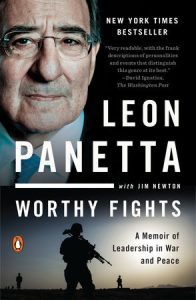
Worthy Fights
₦9,000.00The New York Times–bestselling autobiography of a legendary political and military leader
It could be said that Leon Panetta has had two of the most consequential careers of any American public servant in the past fifty years. His first career, beginning as an Army intelligence officer and including a distinguished run as one of the most powerful and respected members of Congress, lasted thirty-five years and culminated in his transformational role as budget czar and White House chief of staff in the Clinton administration. But after a brief “retirement,” he returned to public service in 2009 as the CIA director who led the intelligence war that killed Osama Bin Laden and then became the U.S. secretary of defense, inheriting two troubled wars in a time of austerity and painful choices. Like his career, Worthy Fights is a reflection of Panetta’s values. It is also a testament to a lost kind of political leadership that favors progress and duty to country over partisanship.
Leon Panetta calls them as he sees them in Worthy Fights. Suffused with its author’s decency and common sense, the book is an inspiring American success story, a great political memoir, and a revelatory view onto many of the defining figures and events of our time.

Year Book
₦17,000.00Hi! I’m Seth! I was asked to describe my book, Yearbook, for the inside flap (which is a gross phrase) and for websites and shit like that, so… here it goes!!!
Yearbook is a collection of true stories that I desperately hope are just funny at worst, and life-changingly amazing at best. (I understand that it’s likely the former, which is a fancy “book” way of saying “the first one.”)
I talk about my grandparents, doing stand-up comedy as a teenager, bar mitzvahs, and Jewish summer camp, and tell way more stories about doing drugs than my mother would like. I also talk about some of my adventures in Los Angeles, and surely say things about other famous people that will create a wildly awkward conversation for me at a party one day.
I hope you enjoy the book should you buy it, and if you don’t enjoy it, I’m sorry. If you ever see me on the street and explain the situation, I’ll do my best to make it up to you.
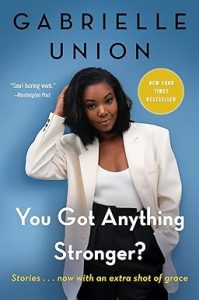
You Got Anything Stronger?
₦9,000.00When I released We’re Going to Need More Wine, the response was so great people asked when I would do a sequel. Frankly, after being so open and honest in my writing, I wasn’t sure there was more of me I was ready to share. But life happens with all its plot twists. And new stories demand to be told.
A lot has changed in four years—I became a mom to two amazing girls. My husband retired. My career has expanded so that I have the opportunity to lift up other voices that need to be heard. But the world has also shown us that we have a lot we still have to fight for—as women, as black women, as mothers, as aging women, as human beings, as friends. In You Got Anything Stronger?, I show you how this ever-changing life presents challenges, even as it gives me moments of pure joy. I take you on a girl’s night at Chateau Marmont, and I also talk to Isis, my character from Bring It On. For the first time, I truly open up about my surrogacy journey and the birth of Kaavia James Union Wade. And I take on racist institutions and practices in the entertainment industry, asking for equality and real accountability. You Got Anything Stronger? is me at my most vulnerable.
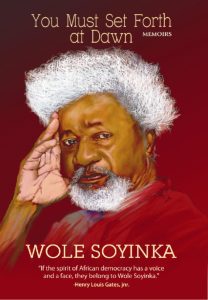
You Must Set Forth At Dawn
₦5,000.00You Must Set Forth at Dawn is an intimate chronicle of his thrilling public life, a meditation on justice and tyranny, and a mesmerizing testament to a ravaged yet hopeful land.
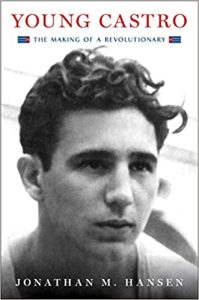
Young Castro
₦6,000.00An intimate, revisionist portrait of the early years of Fidel Castro, showing how an unlikely young Cuban led his country in revolution and transfixed the world.
This book will change how you think about Fidel Castro. Until now, biographers have treated Castro’s life like prosecutors, scouring his past for evidence to convict a person they don’t like or don’t understand. This can make for bad history and unsatisfying biography. Young Castro challenges readers to put aside the caricature of a bearded, cigar-munching, anti-American hot head to discover how Castro became the dictator who acted as a thorn in the side of US presidents for nearly half a century.
These pages show Fidel Castro getting his toughness from a father who survived Spain’s nasty class system and colonial wars to become one of the most successful independent plantation owners in Cuba. They show a boy running around that plantation more comfortable playing with the children of his father’s laborers than his tony classmates at elite boarding schools in Santiago de Cuba and Havana. They show a young man who writes flowery love letters from prison and contemplates the meaning of life, a gregarious soul attentive to the needs of strangers but often indifferent to the needs of his own family. These pages show a liberal democrat who admires FDR’s New Deal policies and is skeptical of communism, but is also hostile to American imperialism. They show an audacious militant who stages a reckless attack on a military barracks but is canny about building an army of resisters. In short, Young Castro reveals a complex man.
The first American historian in a generation to gain access to the Castro archives in Havana, Jonathan Hansen was able to secure cooperation from Castro’s family and closest confidants, gaining access to hundreds of never-before-seen letters and to interviews with people he was the first to ask for their impressions of the man. The result is a nuanced and penetrating portrait of a figure who was determined to be a leader—a man at once brilliant, arrogant, bold, vulnerable and all too human. A man who, having grown up on an island that felt like a colonial cage, was compelled to lead his country to independence.